Sewing Project Book: Streamlining Your KDP Interior Creation
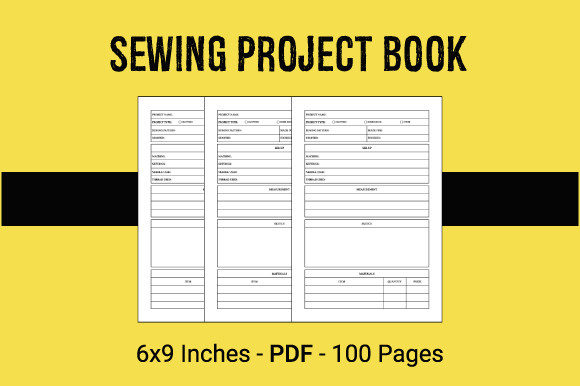
For creators in the Print on Demand (POD) and Amazon Kindle Direct Publishing (KDP) space, time is often the most scarce resource. The Sewing Project Book interior template addresses this bottleneck directly by providing a pre-formatted, 100-page foundation specifically designed for no-content and low-content publishing. Rather than spending hours adjusting margins, setting up bleed lines, or designing repetitive layouts from scratch, publishers can utilize this ready-to-use PDF file to move straight to cover design and listing creation. This digital asset serves as a practical utility for those looking to expand their catalog with functional journals, planners, and logbooks without the technical friction of interior formatting.
Real-World Applications for Niche Publishers
The true value of a pre-made interior like the Sewing Project Book lies in its versatility across different niches. While the name suggests a specific focus on sewing, the structural integrity of a 6" x 9" journal interior applies to a vast array of hobbyist and professional tracking needs. Understanding how to repurpose this layout is key to maximizing return on investment.
Craft and Hobby Tracking
For the crafting community, organization is often secondary to creation, yet it remains essential. A sewist using this book might utilize the pages to log fabric inventory, sketch pattern modifications, or track project completion dates. However, the same 100-page structure works equally well for knitters tracking yarn yardage, quilters documenting block dimensions, or scrapbookers planning page layouts. The generic nature of a standard journal interior allows the end-user to define the content, making it a flexible tool for any maker who needs a physical record of their creative process.
Professional Service Logs
Beyond hobbies, small business owners and freelancers frequently require simple, non-digital record-keeping tools. Tailors and alteration specialists can use this format as a client measurement log or order tracker. Independent designers might employ it as a sketchbook for initial concepts before moving to digital software. In these scenarios, the high-resolution PDF ensures that lines and grids remain crisp when printed, maintaining a professional appearance that reflects well on the service provider using it.
Educational and Skill-Building Journals
Students and self-learners represent another significant demographic for low-content books. Whether someone is learning to sew, studying fashion design, or practicing technical drawing, having a dedicated space for notes and practice is invaluable. Educators and workshop leaders can also leverage these interiors as course companions. By adding a custom cover that specifies the curriculum or skill set, a generic interior transforms into a specialized workbook. This approach reduces overhead for instructors while providing students with a tangible resource for their learning journey.
Technical Specifications and Practical Considerations
Before integrating the Sewing Project Book interior into a publishing workflow, it is important to understand the technical parameters included in the digital file. These specifications dictate how the final product will appear and function on the Amazon KDP platform.
- Dimensions: The 6" x 9" trim size is the industry standard for trade paperbacks and journals. It offers a balance between portability and writing space, fitting easily into bags while providing enough surface area for detailed notes or sketches.
- Page Count: With exactly 100 pages, this interior hits a sweet spot for spine width. Books under 100 pages often cannot have text on the spine, which impacts shelf visibility and perceived value. This count ensures spine text eligibility while keeping printing costs manageable.
- Bleed vs. No Bleed Options: The inclusion of both bleed and no-bleed versions provides critical flexibility. Use the no-bleed version for standard lined or dotted journals where margins are safe. Utilize the bleed version if you plan to add full-page graphics, border designs, or edge-to-edge patterns during customization. Selecting the wrong file type is a common cause of KDP rejection, so having both readily available prevents costly reformatting errors.
- High-Resolution PDF: Print quality is non-negotiable in POD. Low-resolution files result in pixelated lines and fuzzy text, leading to negative reviews. This high-resolution format ensures sharp output regardless of the printer assigned to the order.
Strategic Customization for Market Differentiation
While a ready-to-use PDF saves time, successful KDP businesses understand that differentiation drives sales. The Sewing Project Book interior should be viewed as a canvas rather than a finished product. Simply uploading the raw file with a generic cover rarely yields sustainable results in a competitive marketplace.
Consider adding niche-specific prompts or headers to the first few pages. For a sewing-focused edition, adding a "Project Details" section with fields for fabric type, pattern number, and notions required instantly increases relevance. For a general planner, including monthly reflection prompts or goal-setting frameworks adds perceived value. Even minor modifications, such as adding a branded footer or a table of contents, signal to buyers that the book has been thoughtfully curated rather than mass-produced.
Cover design must also align with the interior's intended use. A minimalist, elegant cover suggests a professional logbook, while colorful, illustrative artwork appeals to hobbyists. The cover sets expectations; ensuring those expectations match the 6" x 9" journal interior inside prevents returns and maintains brand trust. Testing multiple cover styles with the same interior file is an efficient way to identify which aesthetic resonates with specific audience segments.
Navigating Limitations and Quality Control
No digital asset is without constraints, and recognizing them upfront prevents frustration. A fixed 100-page count means you cannot easily add or remove pages without reformatting the entire document. If your niche requires 120 pages or 80 pages, this specific file may not be suitable without significant editing work that negates the time-saving benefit.
Additionally, pre-made interiors lack exclusivity. Other publishers may access similar or identical templates. To mitigate this, focus heavily on unique metadata, keyword research, and cover art. The interior provides the functionality, but your marketing and branding provide the discoverability. Always order a proof copy before launching. Screen resolution differs significantly from print output, and verifying line weight, margin safety, and paper opacity ensures the final Sewing Project Book meets customer expectations. Digital perfection does not always translate to physical satisfaction, and hands-on verification remains the gold standard for POD quality assurance.
Ultimately, this digital resource functions best as part of a broader publishing strategy. It removes the technical barrier to entry for journal creation, allowing creators to focus on market research, niche validation, and audience engagement. By understanding both its applications and its boundaries, publishers can effectively integrate this tool into a sustainable KDP business model that balances efficiency with quality.