KDP Interior - Doctor Visit Log Book: Streamlining Your Low Content Publishing Workflow
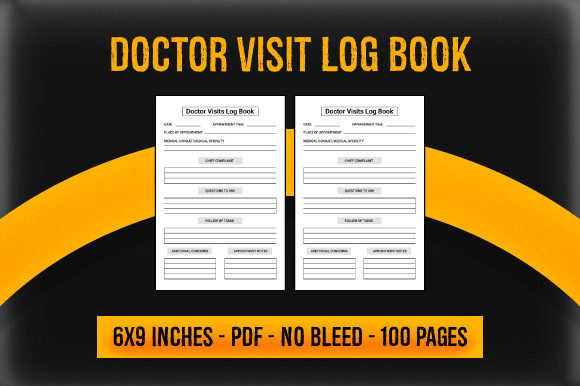
For self-publishers and Print on Demand (POD) entrepreneurs, the bottleneck is rarely the idea; it is the execution. Creating high-quality, functional interiors for niche journals requires significant time investment in layout design, margin calculation, and formatting compliance. The KDP Interior - Doctor Visit Log Book serves as a specialized asset designed to eliminate these technical friction points. This ready-to-use PDF file provides a pre-formatted, 100-page interior specifically tailored for health tracking and medical record-keeping, allowing publishers to bypass the design phase and move directly to cover creation and listing optimization.
In the broader context of a KDP business workflow, this interior functions as a foundational component rather than a standalone product. It fits into the "asset acquisition" or "inventory expansion" phase of your publishing cycle. Whether you are building a portfolio of health-related notebooks, creating a companion journal for a medical non-fiction book, or testing a new micro-niche, having a compliant, professional-grade interior ready for immediate upload reduces turnaround time from days to hours. This efficiency allows creators to focus their energy on market research, keyword strategy, and cover design—elements that directly influence sales velocity—rather than troubleshooting bleed settings or line spacing.
Technical Specifications and Platform Compatibility
Understanding the precise technical parameters of this digital file is essential for seamless integration with Amazon’s printing specifications. The KDP Interior - Doctor Visit Log Book is engineered to meet strict POD requirements, minimizing the risk of rejection during the automated review process.
- Trim Size: 6″ x 9″ Inches. This is the industry standard for trade paperbacks and journals, offering a balance between portability and writing space. It fits comfortably in bags and aligns with reader expectations for personal log books.
- Page Count: 100 Pages. This count is optimized for spine width visibility while keeping printing costs low enough to maintain healthy royalty margins. It provides substantial utility for the end-user without becoming unwieldy.
- Bleed Configuration: No Bleed. The interior is formatted with safe margins, ensuring all text and tracking tables remain within the printable area. This eliminates common formatting errors where content gets trimmed during production.
- File Format: High-Resolution PDF. The vector-based quality ensures crisp lines and legible text at any zoom level, which is critical for customer satisfaction and positive reviews.
These specifications ensure compatibility not only with Amazon KDP but also with other major POD platforms like IngramSpark or Lulu, should you choose to diversify your distribution channels later. The "No Bleed" setting is particularly valuable for publishers who frequently encounter margin warnings, as it builds in a safety buffer that accommodates slight printer variances.
Integrating the Log Book Into Your Publishing Pipeline
The true value of a pre-made interior lies in how effectively it integrates into your existing operational workflow. Rather than treating this file as an isolated task, consider where it enhances specific stages of your business process.
Pre-Publication: Niche Validation and Speed Testing
Before committing to custom design work, use the KDP Interior - Doctor Visit Log Book as a minimum viable product (MVP). If you are researching the "caregiver journal" or "symptom tracker" niches, this interior allows you to publish a test title rapidly. You can validate demand through organic search traffic or Amazon Ads without the sunk cost of custom illustration. If the concept proves profitable, you can then invest in bespoke interiors. If it does not, you have lost minimal time and capital. This approach transforms the interior from a simple template into a strategic market research tool.
During Production: Cover Design Alignment
With the interior secured, your production workflow shifts entirely to exterior packaging. Because the page count (100) and trim size (6x9) are fixed, you can generate your cover template immediately using KDP’s calculator or third-party tools like Book Bolt or Canva. This parallel processing capability means you do not have to wait for interior proofs to begin designing. When creating covers for medical logs, ensure the visual tone matches the structured, clean nature of the interior. A chaotic or overly artistic cover may signal a mismatch to buyers expecting a clinical, organized tracking tool. The pre-set interior dictates a design constraint that actually aids in maintaining brand consistency across a series.
Post-Publication: Series Expansion and Bundling
After publication, this interior supports long-term catalog management. Health tracking is often a recurring need; users may require a new volume annually or for different family members. By using the same standardized interior, you create a consistent user experience that encourages repeat purchases. You can also bundle this log book with related titles, such as diet planners or medication trackers, to create comprehensive health management kits. The uniformity of the 6x9 format and 100-page structure makes physical bundling or cross-promotion visually and logically coherent.
Practical Implementation and Quality Control
While the file is ready-to-use, successful implementation requires attention to detail. Treat the downloaded PDF as a master asset that must be verified before every upload, even if it is pre-formatted.
Verify Metadata Alignment: Ensure your book description accurately reflects the interior's layout. Since this is a generic doctor visit log, specify exactly what fields are included (e.g., date, provider name, symptoms, prescriptions, follow-up notes). Misalignment between customer expectations and actual content is the primary driver of negative reviews in the low-content category. Transparency about the interior structure builds trust and improves conversion rates.
Physical Proofing Protocol: Always order a physical proof copy before launching ads or driving external traffic. While the digital file is high-resolution, screen rendering differs from ink-on-paper reality. Check the opacity of the lines and tables; they should be dark enough to write over but light enough not to distract. Verify that the binding gutter does not impede writing space near the spine. This step validates the "usability" aspect of the product, which is paramount for functional journals.
Customization Within Constraints: Although the interior is static, you can differentiate your product through metadata and categorization. Use the backend keywords to target specific use cases beyond general doctor visits, such as "post-surgery recovery log," "elderly care tracker," or "chronic pain diary." The interior remains the same, but the positioning adapts to different search intents. This maximizes the ROI of a single digital asset by exposing it to multiple audience segments.
Workflow Efficiency and Asset Management
Managing digital assets efficiently is crucial for scaling a KDP business. Store the KDP Interior - Doctor Visit Log Book in a centralized cloud repository with clear version control. Even though this is a static file, maintaining an organized library prevents accidental uploads of outdated or incorrect versions. Create a naming convention that includes dimensions, page count, and bleed status (e.g., DrVisit_Log_6x9_100pg_NoBleed_v1.pdf). This reduces cognitive load during the upload process and minimizes errors when managing dozens of titles.
Consider how this asset interacts with your other resources. If you use project management tools like Trello, Notion, or Asana, link the file directly to your publishing checklist cards. This keeps all necessary components in one place and streamlines handoffs if you work with virtual assistants or cover designers. For educators or coaches who might use this log book as a resource for clients, having a reliable, professionally formatted PDF adds credibility to your recommendations. It transforms a generic commodity into a vetted tool within your professional ecosystem.
Long-Term Usability and User Experience
The sustainability of a low-content book depends entirely on its practical utility. The KDP Interior - Doctor Visit Log Book is designed with end-user functionality as the priority. The 100-page length is deliberate; it is thick enough to feel substantial and justify the price point, yet thin enough to remain portable for appointments. The no-bleed format ensures that users never lose data to the binding, a common frustration with poorly designed journals.
When integrating this into your business, think about the lifecycle of the user. Medical needs are often ongoing. A well-designed log book becomes a trusted companion in healthcare management. By providing a reliable, error-free interior, you contribute to better health outcomes for the user, which in turn builds brand loyalty for your publishing imprint. This focus on genuine utility aligns with current SEO best practices that prioritize helpful content over keyword-stuffed commodities.
Ultimately, this digital file is more than just pages; it is a workflow accelerator. It removes the technical barriers to entry in the health journal niche, allowing you to allocate resources toward marketing, audience building, and strategic growth. Whether used for rapid testing, series expansion, or as a standalone revenue stream, the KDP Interior - Doctor Visit Log Book exemplifies how standardized assets can drive efficiency and quality in the competitive Print on Demand landscape. By understanding its specifications, integrating it thoughtfully into your pipeline, and maintaining rigorous quality standards, you transform a simple PDF into a scalable business asset.