Streamlining Your Publishing Workflow with a KDP Interior - Memory Log Book
The landscape of self-publishing has shifted dramatically in recent years. While writing full-length manuscripts remains a noble pursuit, the rise of low-content and no-content books has opened a lucrative avenue for creators who excel at design, organization, and niche research rather than prose. For publishers utilizing Amazon Kindle Direct Publishing (KDP), the bottleneck is rarely the idea; it is often the execution. Creating consistent, high-quality interiors from scratch for every single project can be time-consuming and technically demanding. This is where pre-formatted digital assets become indispensable.
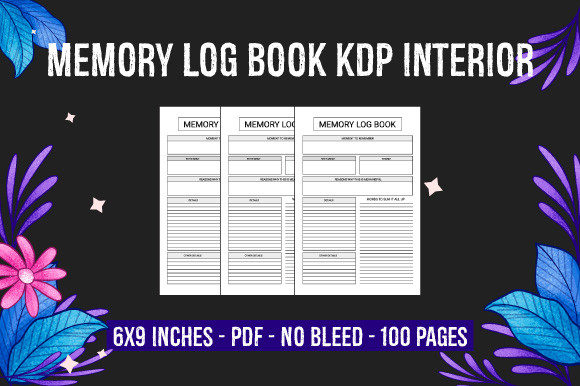
A professionally designed KDP Interior - Memory Log Book serves as more than just a template; it acts as a foundational infrastructure for your publishing business. When you utilize ready-to-use PDF files specifically engineered for print-on-demand, you eliminate the guesswork regarding margins, bleed settings, and resolution. Instead of spending hours adjusting guidelines in design software, you can focus on what actually drives sales: keyword research, cover design, and marketing strategy. The availability of a 100-page interior in the standard 6″ x 9″ dimension provides a versatile canvas that suits a wide variety of niches, from genealogy tracking to daily mindfulness journaling.
Technical Precision in Print on Demand Files
One of the most common reasons for rejection or poor customer reviews in the KDP ecosystem is technical formatting errors. Amazon’s printing robots are precise, and they do not forgive margin violations or low-resolution graphics. A high-quality ready-to-use PDF file addresses these pain points before you even upload your manuscript.
The inclusion of both bleed and no-bleed options within the same package is a critical feature for modern publishers. Understanding the difference is vital for your book's aesthetic and functionality:
- No Bleed Version: This format keeps all content safely within a defined margin area. It is ideal for memory log books where text entry needs to be clearly bounded, ensuring that handwriting never gets trimmed during the manufacturing process. This version offers a classic, structured look that appeals to older demographics or those using the book for archival purposes.
- Bleed Version: If your design elements, background patterns, or decorative borders extend to the very edge of the paper, you require the bleed setting. This creates a seamless, professional appearance that mimics traditionally published trade books. Having this option readily available allows you to pivot your design style without reformatting the entire document.
Furthermore, the assurance of high-resolution PDF files cannot be overstated. Blurry lines or pixelated prompts ruin the user experience of a memory log book. Customers expect crisp, dark lines that make writing easy and visually pleasing. By starting with a source file that meets industry standards for DPI (dots per inch), you safeguard your brand reputation against negative feedback related to print quality.
Versatility Across Niches and Audiences
A frequent misconception about pre-made interiors is that they limit creativity. In reality, a well-structured KDP Interior - Memory Log Book is inherently modular. The 6″ x 9″ trim size is the gold standard for journals because it is portable enough to carry in a bag yet large enough to provide ample writing space. This specific dimension strikes a balance between utility and shelf presence.
Consider how a single 100-page interior can be adapted for multiple distinct markets simply by changing the cover and title metadata:
- Genealogy and Family History: Market the book as a heritage keeper where users record stories from grandparents. The structured prompts guide users who may not know where to start when documenting family lore.
- Caregiving and Medical Tracking: Reposition the interior as a memory aid for caregivers tracking medication, appointments, and daily moods for patients with dementia or Alzheimer’s. The repetitive structure provides comfort and necessary data logging.
- Mental Health and Reflection: Use the same pages as a gratitude or shadow work journal. The "memory" aspect translates seamlessly to remembering positive experiences or processing past events.
- Hobby Documentation: Gardeners, bird watchers, and crafters often need log books to remember specific details from previous seasons or projects. A generic memory log structure accommodates these specialized entries perfectly.
This adaptability means that one digital asset can generate multiple income streams. You are not buying a single book; you are acquiring a flexible system that responds to market trends without requiring additional design labor.
Optimizing the "Just Add Cover" Workflow
Speed to market is a significant factor in POD success. Trends emerge and fade quickly. If you identify a rising search term for "dementia activity book" or "military service memory log," waiting two weeks to design an interior means missing the wave. Ready-to-use PDF files enable a rapid deployment strategy.
The workflow becomes streamlined and repeatable. Once you have your high-resolution interior selected, your creative energy shifts entirely to the cover. In the low-content space, the cover is responsible for nearly 90% of the click-through rate. By removing interior creation from your immediate to-do list, you can dedicate more time to studying bestseller covers, testing color psychology, and refining typography. This division of labor—using premium pre-made interiors while custom-building covers—is how successful publishers scale their operations without burning out.
Additionally, having a standardized 100-page count simplifies your pricing strategy. You will know exactly what your printing costs are for this specific page count and trim size, allowing you to calculate royalties instantly. There is no need to adjust pricing models for varying page lengths, which reduces administrative friction when managing a large catalog.
Evaluating Quality Before Publication
While ready-to-use files offer immense convenience, publishers must still exercise due diligence. Not all digital assets are created equal. When selecting a KDP Interior - Memory Log Book, look beyond the thumbnail preview. Verify that the file includes proper safe zones. Text that sits too close to the gutter (the inner binding edge) makes a book difficult to write in, leading to customer dissatisfaction. A superior template will account for this binding gap, especially in a 100-page book where the spine thickness begins to impact usability.
Also, consider the paper type you intend to select on KDP. Standard white paper is typical for log books, but cream paper offers a warmer feel for memoir-style journals. Ensure the contrast of the PDF lines works well with both options. High-quality templates are tested across different paper stocks to ensure legibility remains consistent. Finally, always order a physical proof copy before launching. Seeing the bleed alignment and line weight in person is the only way to truly validate that the digital file translates correctly to the physical product.
Building a Sustainable Catalog with Digital Assets
Integrating pre-formatted interiors into your business model is about building sustainability. It moves publishing from a craft-based endeavor, where every item is handmade from zero, to a product-based business with scalable systems. The KDP Interior - Memory Log Book represents a component in a larger assembly line of creativity.
This approach also lowers the barrier to entry for new publishers. Learning professional typesetting and layout design takes months of practice. By leveraging expertly crafted PDFs, beginners can launch professional-grade products immediately while learning the nuances of the platform. For veterans, it frees up mental bandwidth to explore more complex projects or expand into adjacent platforms like Etsy or Lulu.
Ultimately, the value of these digital files lies in their ability to bridge the gap between ideation and realization. They provide the structural integrity required for print-on-demand success while offering the flexibility needed to serve diverse customer needs. Whether you are creating a legacy keeper for families or a functional tracker for hobbyists, starting with a robust, high-resolution, properly formatted interior ensures that your final product meets the expectations of today’s discerning readers. In a competitive marketplace, quality and efficiency are not mutually exclusive; with the right tools, they go hand in hand.