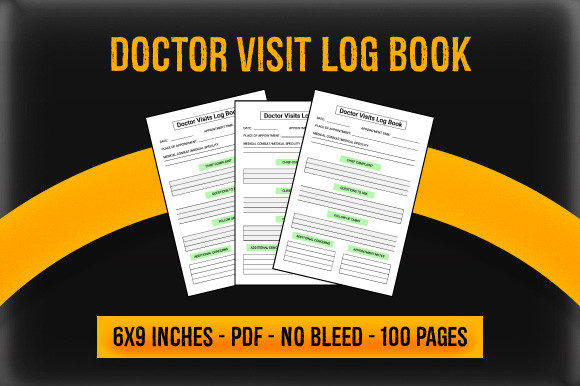
Evaluating the Doctor Visit Log Book Interior for KDP Publishing
For self-publishers and print-on-demand entrepreneurs, the viability of a low-content book often hinges on the specificity and utility of its interior. Generic notebooks face saturated markets, but functional logs like a Doctor Visit Log Book address tangible user needs in the health and wellness niche. This specific digital asset provides a pre-formatted, 100-page PDF interior designed for Amazon KDP and other POD platforms. Rather than spending hours designing tables and tracking fields from scratch, publishers can utilize this ready-to-use file to create a practical medical journal. The value proposition here is not just time savings, but the inclusion of structured data fields that actual patients and caregivers require when managing healthcare appointments.
Functional Design and Practical Utility
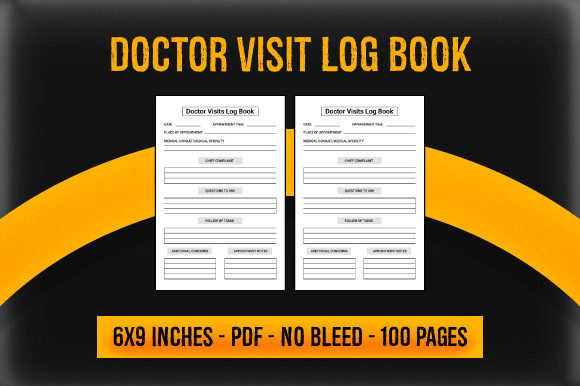
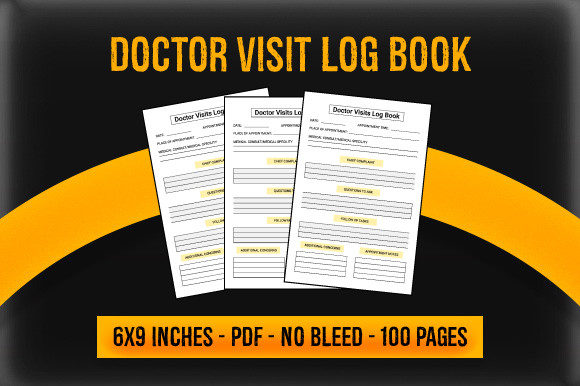
The primary strength of this Doctor Visit Log Book interior lies in its focus on functionality over aesthetics. In the medical logging niche, users are not looking for decorative flourishes; they need clear, legible space to record critical information under potentially stressful circumstances. A well-designed interior must balance density with whitespace, ensuring that elderly users or those with visual impairments can write comfortably. This 100-page layout typically includes dedicated sections for appointment dates, provider names, symptoms, medications prescribed, follow-up instructions, and insurance details.
From a product development perspective, this structure transforms a blank notebook into a specialized tool. When evaluating this asset for your catalog, consider how the page layout facilitates real-world use. Does it allow enough room for detailed notes during a consultation? Is there a distinct area for listing current medications versus new prescriptions? These micro-decisions in interior design determine whether a customer leaves a positive review praising the book’s usefulness or a negative one criticizing its impracticality. The provided PDF aims to solve these usability challenges by offering a standardized format that aligns with common patient workflows.
Technical Specifications for Print on Demand
Successful KDP publishing requires strict adherence to technical formatting standards. This digital file is engineered specifically for the 6″ x 9″ trim size, which is widely considered the industry standard for portable health journals. This dimension offers an optimal balance between writing surface area and portability, fitting easily into purse bags, glove compartments, or backpacks. For publishers, selecting the correct trim size is crucial for minimizing printing costs while maximizing perceived value.
The file is configured as a No Bleed PDF. This distinction is vital for low-content creators. No-bleed interiors keep all content within a safe margin, eliminating the risk of text or lines being trimmed off during the binding process. This is particularly important for log books where functional lines and table borders must remain intact. Furthermore, the high-resolution quality ensures crisp printing. Blurry lines or pixelated text can render a medical log unusable and damage your publisher reputation. By utilizing a pre-verified high-res PDF, you mitigate quality control issues that frequently plague amateur designs.
- Trim Size: 6″ x 9″ Inches (Standard Trade Paperback)
- Page Count: 100 Pages (Optimal spine width for title visibility)
- Bleed Setting: No Bleed (Safe margins for all elements)
- File Format: High-Resolution PDF (Print-ready quality)
- Content Type: Structured Medical Tracking Tables
Market Positioning and Audience Fit
Understanding who buys a Doctor Visit Log Book is essential for effective marketing and cover design. This interior is not targeted at general journaling enthusiasts. The core demographic includes adults aged 20–50 who act as caregivers for aging parents, individuals managing chronic conditions, or parents tracking pediatric health milestones. Professionals such as home health aides, nurses, and social workers also represent a significant secondary market. These users prioritize organization, durability, and clarity.
For marketers and KDP sellers, this specificity allows for precise keyword targeting and ad placement. Instead of competing for broad terms like "notebook," you can target long-tail keywords related to medical organization, caregiver support, and health tracking. The interior’s consistent structure supports this positioning. When your book’s description promises specific tracking features, the interior must deliver exactly that. This alignment between marketing claims and product reality builds trust and encourages repeat purchases within the health niche.
Strategic Advantages for Publishers
Integrating this ready-to-use PDF into your publishing workflow offers several strategic benefits beyond simple convenience. First, it drastically reduces production time. Designing a functional 100-page table layout in InDesign or Canva can take days of iterative testing to get margins and line weights correct. This asset bypasses that learning curve, allowing you to focus resources on cover design and keyword research—the two factors that actually drive sales.
Second, it provides a scalable foundation for series creation. Once you validate that this specific Doctor Visit Log Book interior performs well, you can create variations using the same base layout. You might develop editions specifically for dental visits, veterinary records, or mental health therapy sessions. Maintaining consistency across a series helps build brand recognition and increases the lifetime value of each customer. The reliability of a pre-made master file ensures that every book in the series maintains uniform quality and formatting.
Assessing Quality and Long-Term Value
When investing in digital assets for commercial use, due diligence regarding quality is non-negotiable. While this PDF is marketed as ready-to-publish, professional publishers should always perform a test print or digital proof review before launching. Verify that the contrast levels meet KDP’s ink spread requirements and that the font sizes are accessible. A medical log with 8pt font may be technically printable but functionally useless for seniors with presbyopia. Ensuring accessibility is both an ethical consideration and a business imperative in this category.
The long-term value of this asset also depends on licensing and uniqueness. Because this is a commercially available template, other publishers may have access to identical interiors. To differentiate your product, you must add unique value through your cover design, title optimization, and supplementary content. Consider adding a few pages of introductory guidance, emergency contact templates, or insurance reference charts to the front matter. These small additions transform a generic template into a proprietary product, insulating your listing from direct price competition.
Realistic Expectations and Limitations
It is important to approach this resource with realistic expectations. A high-quality interior is necessary but not sufficient for success. The low-content book market has matured, and simply uploading a PDF will not generate passive income without active management. This Doctor Visit Log Book file solves the production bottleneck, but it does not solve the discovery problem. Sellers must still invest in competitive analysis, professional cover design, and ongoing advertising strategies.
Additionally, be aware of platform policy updates. Amazon KDP periodically adjusts guidelines regarding repetitive content and AI-generated materials. While this human-designed interior generally complies with current standards, maintaining awareness of policy shifts protects your account. Diversifying your distribution channels to include Etsy digital downloads or IngramSpark can also reduce platform dependency. On Etsy, for example, this same PDF could be sold directly as a printable planner, creating an additional revenue stream from the same asset.
Implementation Recommendations for Creators
For freelancers, bloggers, and educators entering the health publishing space, this tool serves as an excellent entry point. However, success requires treating the interior as a component rather than the entire product. Pair this log book with educational content on your blog or social media channels about managing healthcare documentation. Content marketing that addresses the pain points of caregivers creates natural demand for organizational tools like this log book.
When listing the product, transparency builds credibility. Clearly state the dimensions, page count, and no-bleed configuration in your book description. Use "Look Inside" features effectively to showcase the actual table layouts. Customers in the medical niche are risk-averse; they need to verify that the columns and rows match their specific tracking needs before purchasing. Providing this visibility reduces return rates and improves conversion.
Ultimately, the Doctor Visit Log Book interior represents a pragmatic solution for publishers seeking to serve the health organization market efficiently. Its standardized 6x9 format, 100-page count, and no-bleed configuration align perfectly with POD requirements. By combining this reliable technical foundation with thoughtful differentiation and targeted marketing, creators can build sustainable products that genuinely assist users in managing their healthcare journeys. The asset removes the friction of design, allowing you to concentrate on connecting the right tool with the people who need it most.