Evaluating the KDP Interior - Horse Riding Journal for Print on Demand
The low-content and medium-content book market on Amazon Kindle Direct Publishing (KDP) has matured significantly. Success in this space no longer comes from uploading generic lined notebooks; it requires niche specificity and functional design. For publishers targeting the equestrian community, the KDP Interior - Horse Riding Journal represents a specialized asset designed to bridge the gap between digital file acquisition and physical product availability. This resource provides a pre-formatted, 100-page PDF interior tailored specifically for riders, trainers, and horse owners. Understanding the practical utility, technical specifications, and market fit of this ready-to-use file is essential for entrepreneurs and creators looking to expand their print-on-demand portfolios with purposeful content.
Niche Specificity and Functional Design
The primary value proposition of this KDP interior lies in its relevance to a passionate, high-engagement audience. Equestrians are not merely hobbyists; they are often serious athletes or caretakers who require meticulous record-keeping. A generic journal does not serve a rider tracking feeding schedules, veterinary visits, training progress, or competition results. The KDP Interior - Horse Riding Journal addresses this specific need by providing structured layouts that facilitate data entry relevant to equine management.
From a product development perspective, this specificity reduces the friction typically associated with creating niche interiors from scratch. Designing a functional horse riding log requires an understanding of what data points matter to the end user. By utilizing a pre-made 100-page template, publishers can bypass the research and design phase, moving directly to cover creation and listing optimization. This efficiency is particularly valuable for freelancers and small business owners managing multiple SKUs, as it allows for rapid testing of sub-niches within the broader equestrian category, such as dressage logs, jumping records, or general stable management journals.
Technical Specifications and KDP Compliance
For any print-on-demand project, technical accuracy is non-negotiable. A beautifully designed interior is useless if it fails Amazon’s automated review process or results in a poor customer experience due to formatting errors. This digital file includes precise specifications that align with current KDP standards:
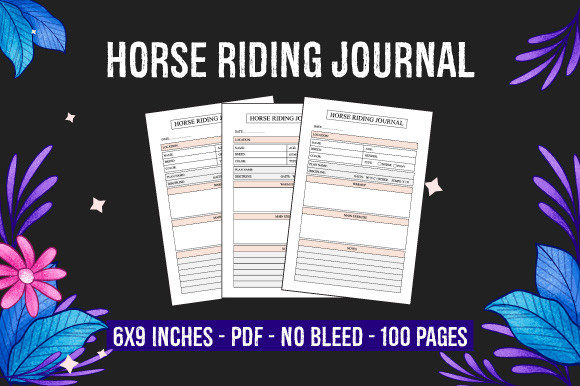
- Dimensions: 6″ x 9″ inches. This is arguably the most versatile trim size for journals. It is portable enough to fit in a saddlebag or grooming kit, yet offers sufficient surface area for writing detailed entries. Larger sizes like 8.5x11 can be cumbersome in a barn environment, while smaller sizes limit usability.
- Page Count: 100 pages. This count strikes a balance between perceived value and printing cost. At 100 pages, the spine is wide enough to accommodate text (a crucial factor for shelf visibility), but the production cost remains low enough to allow for competitive pricing and healthy royalty margins.
- Bleed Settings: No Bleed. This specification indicates that all content is contained within the safe zone margins. For text-heavy or form-based interiors like riding journals, "no bleed" is often preferable. It ensures that critical writing lines and prompts never risk being trimmed off during manufacturing, reducing the likelihood of customer returns due to printing defects.
- File Format: High-Resolution PDF. Vector-based or high-DPI raster PDFs ensure crisp printing. Blurry lines or pixelated text destroy credibility instantly in the low-content space. Ready-to-use files must meet professional print standards to maintain brand reputation.
Workflow Integration and Time Efficiency
For marketers, educators, and creators, time is the most constrained resource. The "ready-to-use" nature of this asset streamlines the publishing workflow. Instead of spending 10 to 20 hours designing a custom interior in InDesign or Canva, a publisher can integrate this file into their production pipeline in minutes. This shift allows professionals to focus their energy on higher-value activities: keyword research, cover design differentiation, advertising strategy, and brand building.
However, efficiency should not come at the cost of uniqueness. While the interior is ready to publish, successful sellers should treat it as a foundation rather than a final product. Adding a unique title page, a personalized introduction, or supplementary resources (such as a list of local veterinarians or farriers) can transform a standard PLR-style interior into a proprietary product. This hybrid approach leverages the speed of pre-made assets while satisfying the demand for original content.
Audience Fit and Market Viability
Determining whether the KDP Interior - Horse Riding Journal fits your business model requires an honest assessment of your target demographic and capabilities. This asset is best suited for:
- Niche Publishers: Those already operating in the sports, outdoors, or pet categories who understand the language and needs of equestrians.
- Print-on-Demand Beginners: Entrepreneurs learning the technical ropes of KDP who need a verified, compliant file to practice cover alignment and metadata optimization without risking formatting rejections.
- Riding Instructors and Trainers: Professionals who wish to create branded merchandise or student workbooks without hiring a graphic designer.
- Content Creators: Bloggers or influencers in the horse niche looking to monetize their audience with a tangible tool that complements their digital content.
Conversely, this product may not be suitable for those seeking passive income without effort. The equestrian niche is knowledgeable; customers will recognize a generic, uncustomized template. If you cannot commit to creating a high-quality, niche-relevant cover or writing a compelling book description that speaks to riders' specific pain points, the interior alone will not generate sales. The file solves the production problem, not the marketing problem.
Quality Assessment and Practical Limitations
When evaluating ready-to-use PDF files, one must look beyond the feature list to assess long-term viability. A key consideration is exclusivity. Because this is a digital download available to multiple buyers, there is an inherent risk of market saturation. To mitigate this, users must rely heavily on cover design and branding to differentiate their offering. The interior provides the structure, but the exterior sells the book.
Additionally, users should verify the flexibility of the PDF. Since this is a flattened, ready-to-print file, editing individual elements (like changing a prompt label or adjusting line spacing) may be difficult or impossible depending on how the file was generated. Publishers requiring deep customization may find this limiting. It is advisable to preview the file thoroughly before purchase to ensure the layout matches your vision. If the prompts are too vague or the spacing too tight for handwriting, the user experience will suffer regardless of print quality.
Another realistic limitation is the evolving nature of KDP guidelines. While the current specs (6x9, no bleed) are standard, Amazon periodically updates margin requirements and file acceptance criteria. Responsible publishers should always run any pre-made file through the KDP Previewer tool before publishing. Never assume a third-party file is automatically compliant; verification is a mandatory step in professional self-publishing.
Strategic Recommendations for Implementation
To maximize the return on investment for the KDP Interior - Horse Riding Journal, consider the following strategic approaches:
- Bundle Value: Combine this journal with other complementary low-content interiors (e.g., a horse health tracker or show schedule) to create a comprehensive equestrian planner series. Series sell better than standalone items because they encourage repeat purchases.
- A/B Test Covers: Since the interior is fixed, your cover is your primary variable. Create multiple cover designs targeting different sub-segments (e.g., one for young riders, one for professional trainers) to see which resonates best with your audience.
- Leverage A+ Content: Use Amazon’s A+ Content feature to showcase the interior pages visually. Customers in this niche want to see exactly what fields are included before buying. Showing the actual layout builds trust and reduces return rates.
- Seasonal Timing: Align publication and advertising pushes with equestrian seasons. Launching before the spring show season or holiday gift-giving periods can significantly impact visibility and sales velocity.
Ultimately, the KDP Interior - Horse Riding Journal serves as a practical tool for efficient product development. It removes technical barriers and accelerates time-to-market for publishers serving the equestrian community. However, its success depends entirely on how it is positioned, packaged, and marketed. When used as part of a broader, customer-centric publishing strategy, it offers genuine value. When treated as a shortcut to easy profits, it is unlikely to perform. Professional evaluation suggests that for serious POD operators willing to add their own creative layer, this asset is a viable component of a diversified catalog.