Evaluating Kindness Journal Interiors for Print on Demand and KDP Publishing
The self-care and mindfulness niche has evolved significantly within the print-on-demand landscape, moving beyond generic gratitude logs toward more specific emotional practices. A Kindness Journal represents a distinct sub-category in this market, focusing specifically on prosocial behavior, empathy, and outward-facing positivity rather than solely internal reflection. For publishers and creators utilizing Amazon Kindle Direct Publishing (KDP) or other POD platforms, understanding the nuances of this format is essential for creating a product that resonates with adult users aged 20 to 50. When evaluating ready-to-use PDF interiors for this purpose, particularly 100-page no-content or low-content files, it is necessary to assess how these pre-made assets align with current market expectations and technical printing standards.
Distinguishing Kindness Journals from General Gratitude Logs
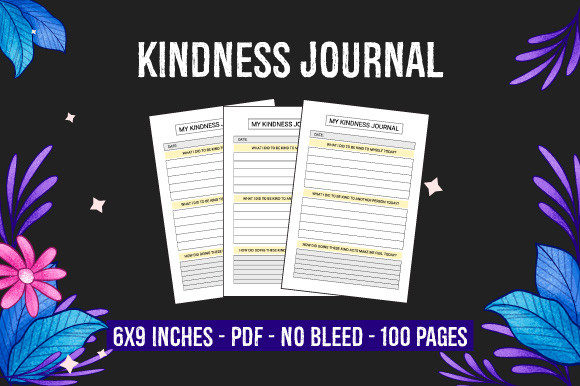
While often grouped together, kindness journals and gratitude journals serve different psychological functions and require different interior layouts. Gratitude journals typically prompt users to list things they are thankful for, focusing on appreciation of circumstances or possessions. In contrast, a Kindness Journal prompts active engagement. The interior pages must facilitate tracking acts of service, reflections on interpersonal interactions, or intentional planning for compassionate behavior. When selecting a 6" x 9" PDF template, the distinction lies in the prompting structure. A generic lined page may suffice for free-form writing, but a specialized kindness journal often benefits from structured sections such as "Who did I help today?", "How did it make me feel?", or "One kind act I can do tomorrow."
This functional difference impacts the viability of ready-to-use interiors. Publishers must verify that the 100-page PDF they intend to use actually supports the kindness methodology. Using a standard diary layout for a book marketed specifically as a kindness tool can lead to negative reviews from customers who expected guided prompts. Conversely, using a highly structured kindness template for a general mindfulness book may limit its appeal. Evaluating the specific content of the digital file against the intended marketing angle is the first step in ensuring product-market fit.
Technical Specifications: Assessing 6x9 No-Bleed PDF Files
The technical quality of the interior file dictates the final user experience and printing cost efficiency. The 6" x 9" dimension is the industry standard for trade paperbacks in this genre, offering a portable size that fits easily into bags while providing sufficient writing space. However, the specification of "No Bleed" requires careful consideration during the publishing setup process. No-bleed interiors mean all text and design elements must remain within a safe margin, typically 0.375 inches from the edge on the binding side and 0.25 inches on the outer edges.
When sourcing high-resolution PDF files, verify that the margins are correctly set for KDP’s automated review system. A common issue with low-quality ready-to-use files is insufficient gutter margin, which results in text being swallowed by the binding or rejected during upload. High-resolution ensures that lines and prompts remain crisp at 300 DPI; pixelated interiors suggest an unprofessional product to adult consumers comparing options. Furthermore, a 100-page count sits at a strategic price point. It provides enough substance to justify a mid-range price tag without inflating printing costs to the point where royalties become negligible. Comparing this to thinner 80-page journals or thicker 150-page volumes helps determine if 100 pages offers the optimal balance of perceived value and profit margin for your specific business model.
Ready-to-Use vs. Custom Interiors: Tradeoffs and Decision Factors
The decision to utilize a pre-made 100-page PDF versus designing a custom interior involves weighing speed-to-market against brand differentiation. Ready-to-use files offer immediate deployment. For publishers testing the kindness niche or expanding a catalog quickly, these assets reduce production time from weeks to hours. They eliminate the learning curve associated with typesetting and margin calculations. However, this convenience comes with the tradeoff of ubiquity. If multiple publishers source the same commercial license PDF, the marketplace becomes saturated with identical interiors, making cover design and keyword strategy the only differentiators.
Custom interiors allow for unique branding and proprietary prompts that cannot be replicated by competitors. This approach builds long-term asset value and customer loyalty but requires significant upfront investment in design software and time. For those evaluating this choice, consider the maturity of your publishing business. New entrants or those validating a new keyword cluster may benefit from the low-risk entry of ready-to-use files. Established brands with an existing audience may find that generic interiors dilute their brand equity. A hybrid approach often works best: using high-quality stock interiors as a baseline and modifying headers, footers, or introductory pages to add unique value without redesigning the entire 100-page document.
Evaluating Content Depth and User Engagement
Adult users in the 20–50 demographic often seek depth over novelty. When reviewing sample pages of a potential PDF purchase, assess whether the layout encourages sustained use over 100 days. Repetitive layouts can lead to abandonment after two weeks. Effective kindness journals often incorporate variety, such as alternating between daily logs, weekly reflections, and inspirational quotes. Check if the ready-to-use file includes this variation or if it is merely one page duplicated 100 times. While single-layout files are easier to produce, they frequently result in lower customer retention and poorer reviews compared to dynamic interiors that guide the user through a progressive journey of habit formation.
Market Fit: When a Kindness Journal Is the Right Choice
Determining whether to publish a Kindness Journal specifically, rather than a broader wellness journal, depends on target audience research. This format performs exceptionally well for demographics interested in social-emotional learning, therapy adjuncts, parenting resources, or community building. It is distinct from solo-mindfulness products because it emphasizes connection. If your marketing channels or existing catalog focus on relationships, education, or mental health advocacy, a kindness-specific interior is likely a strong fit.
However, if your audience primarily seeks stress reduction, sleep improvement, or anxiety management, a traditional gratitude or CBT-based journal may be more appropriate. Kindness journals require a level of external engagement that not all users want during personal downtime. Analyzing search volume and competitor reviews for terms like "acts of kindness tracker," "empathy journal," and "prosocial habits" can validate demand before committing to a specific PDF template. Additionally, consider seasonality; kindness journals often see spikes during holidays, back-to-school seasons, or awareness months related to mental health and anti-bullying, whereas general journals have steadier year-round demand.
Navigating Licensing and Commercial Use Rights
A critical evaluation factor for ready-to-use POD interiors is the licensing agreement. Not all PDF files sold online grant full commercial rights for KDP. Some licenses restrict the number of copies, prohibit use on Amazon specifically, or require attribution. Others may allow unlimited use but forbid trademarking the resulting book series. Before purchasing any 100-page interior file, read the license terms explicitly. Ensure the file is designated for commercial POD use and that you are not buying a personal-use-only product. Violating these terms can result in account termination and legal liability. Furthermore, verify that the seller actually owns the copyright to the interior; marketplaces occasionally host stolen designs, and publishing them can lead to takedown notices even if you purchased in good faith. Due diligence in vetting the source is as important as evaluating the design quality itself.
Integrating Interiors with Cover Strategy
The interior file does not exist in isolation; it must be congruent with the cover design and metadata. A minimalist, black-and-white 100-page interior pairs poorly with a neon, chaotic cover that promises vibrant illustrations inside. Consistency manages customer expectations and reduces returns. When using a standard no-bleed PDF, ensure your cover designer accounts for the exact spine width calculated for 100 pages on cream or white paper, depending on your selection. Even minor discrepancies in spine calculation can cause the cover art to shift during printing, ruining the professional appearance.
Additionally, consider how the interior supports your back cover copy. If your description highlights specific features like "guided prompts for daily compassion" or "reflection spaces for emotional growth," those exact elements must be visible in the Look Inside feature and the physical book. Using a ready-to-use file means you cannot easily change the interior to match marketing claims made later. Therefore, finalize your interior selection before writing your book description or designing your cover to ensure alignment across all touchpoints. This holistic evaluation ensures that the convenience of a pre-made PDF translates into a cohesive, professional product that meets the standards of discerning adult buyers in the competitive self-help category.