Evaluating the ADHD Behaviour Journal KDP Interior for Low-Content Publishing
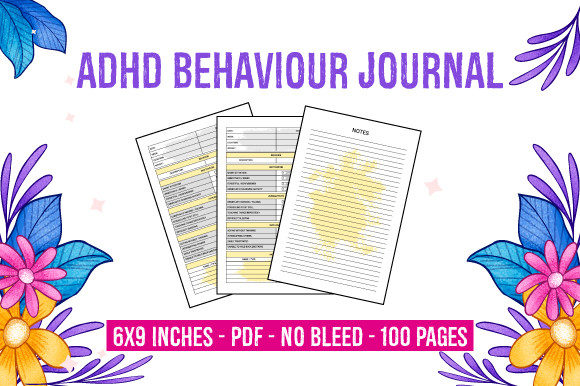
Selecting the right interior template is often the most critical decision in the low-content publishing workflow. For creators focusing on neurodivergent niches, the ADHD Behaviour Journal KDP Interior represents a specific category of functional design that differs significantly from generic planners or standard notebooks. This resource provides a pre-formatted, 100-page PDF designed specifically for Amazon Kindle Direct Publishing (KDP) and Print on Demand (POD) platforms. Understanding the technical specifications and market positioning of this asset is essential for publishers who want to balance production efficiency with genuine user utility.
The primary value proposition of this digital file lies in its readiness. It eliminates the need for custom layout design, which can be a significant barrier for publishers without graphic design expertise. However, convenience should not be the sole metric for evaluation. Publishers must assess whether the structure of these interiors aligns with current best practices for ADHD management and how they compare to other available options in the marketplace. The distinction between a helpful tool and a generic notebook often determines long-term sales performance and review quality in this sensitive niche.
Technical Specifications and Production Standards
Before integrating any pre-made interior into a publishing strategy, verifying technical compliance is mandatory. This ADHD Behaviour Journal KDP Interior adheres to specific industry standards that mitigate common printing errors. The dimensions are set at 6″ x 9″ inches, which is widely considered the optimal trim size for personal journals. This format offers enough writing space for daily tracking while remaining portable enough for users to carry in a bag or keep on a desk without feeling cumbersome.
A crucial technical detail included in this package is the "No Bleed" specification. In KDP publishing, bleed refers to content that extends beyond the trim line. Many new publishers struggle with bleed settings, resulting in rejected files or cropped content. A no-bleed interior ensures that all margins remain safely within the printable area, simplifying the upload process and reducing the risk of formatting rejections. The high-resolution PDF format further ensures that lines, text, and prompts remain crisp after printing, avoiding the fuzzy or pixelated appearance that often plagues low-quality POD products.
Page Count and Structural Integrity
The 100-page count serves as a strategic baseline for this type of journal. When comparing options, publishers will find interiors ranging from 40 pages to over 200 pages. A 100-page interior strikes a practical balance for an ADHD behaviour journal. It provides approximately three months of daily tracking or several months of weekly reflection, depending on the page density. This duration is sufficient for habit formation and pattern recognition without making the book physically intimidating or prohibitively expensive to print. Thicker books increase spine width and production costs, which can compress profit margins or raise the retail price beyond what customers expect for a functional workbook.
Comparing Pre-Made Interiors Versus Custom Design
Publishers frequently debate whether to purchase ready-to-use PDF files or invest time in creating custom layouts. Both approaches have distinct tradeoffs that influence business viability and product quality.
- Speed to Market: Using a ready-to-use ADHD Behaviour Journal KDP Interior allows for immediate publication. Custom design requires learning software like Adobe InDesign or Affinity Publisher, researching therapeutic frameworks, and iterating on layouts. For publishers testing a new niche or expanding their catalog quickly, pre-made files offer a significant velocity advantage.
- Uniqueness and Differentiation: The primary limitation of pre-made assets is saturation. If multiple sellers use the exact same interior, differentiation relies entirely on cover design and marketing copy. Custom interiors allow for unique features, proprietary tracking methods, or personalized branding that cannot be replicated by competitors using stock assets.
- Cost Efficiency: Hiring a professional designer for a custom 100-page interior can cost hundreds of dollars. Pre-made files represent a fraction of that expense. For publishers with limited capital, this lower entry cost reduces financial risk, allowing funds to be allocated toward advertising or cover design instead.
- Clinical Accuracy: High-quality custom designs are often informed by occupational therapists or ADHD coaches. Generic pre-made templates may lack this depth. Publishers using pre-made files must critically evaluate whether the prompts and trackers reflect evidence-based strategies or merely aesthetic trends.
Evaluating Functional Utility for the End User
In the ADHD niche, aesthetics are secondary to function. Users purchase these journals to solve specific problems related to executive dysfunction, emotional regulation, and memory. When evaluating this interior, consider how it compares to alternative tracking methods and formats.
Structured Tracking vs. Freeform Journaling
This interior likely utilizes structured prompts and tables rather than blank lined paper. Research indicates that individuals with ADHD often struggle with unstructured spaces; blank pages can induce decision paralysis. Structured interiors reduce cognitive load by providing a clear framework for what to write. Compared to freeform journals, a structured ADHD Behaviour Journal KDP Interior offers higher utility for behavior modification. However, some users prefer hybrid models that combine structured tracking with open reflection space. Publishers should verify if this specific template offers that flexibility or if it is rigidly formatted.
Digital Alternatives and App Integration
Physical journals compete directly with digital apps like Notion, Trello, or specialized ADHD trackers. Physical books offer advantages that digital tools cannot replicate: tactile engagement, freedom from screen-based distractions, and battery independence. For users who find screens overstimulating or distracting, a physical POD journal is a superior alternative. However, digital tools excel at data aggregation and reminders. This interior is best positioned for users who have tried digital solutions without success or who specifically seek analog mindfulness practices. Marketing materials should acknowledge this distinction rather than claiming superiority over digital tools in all contexts.
Strategic Fit: When to Use This Resource
Determining whether this specific ADHD Behaviour Journal KDP Interior fits your publishing portfolio requires honest assessment of your goals and resources.
This resource is likely a strong fit if:
- You are new to KDP and need to learn the publishing workflow without the added complexity of design.
- You have identified a gap in the market for ADHD journals but lack the clinical knowledge to design effective prompts from scratch.
- You are building a series and need consistent interior formatting across multiple titles.
- Your budget restricts custom design work, but you still require professional-grade resolution and sizing.
Alternative options may be preferable if:
- You aim to build a premium brand with proprietary methodologies that require bespoke layout architecture.
- You have identified that existing pre-made templates in this niche are oversaturated and indistinguishable.
- You possess advanced design skills and clinical expertise that would yield a significantly superior product.
- Your target audience requires specialized accommodations (e.g., dyslexia-friendly fonts, specific color contrasts) that standard templates do not provide.
Navigating Limitations and Quality Assurance
Even high-quality pre-made interiors require due diligence. Before publishing, download and thoroughly review the sample pages. Check for adequate gutter margins, as binding can obscure content near the spine. Verify that prompts are phrased neutrally and supportively; language matters immensely in mental health adjacent products. Ensure the file truly is high-resolution; zoom in to 200% to check for vector sharpness versus rasterization artifacts.
Additionally, consider the licensing terms. Most ready-to-use PDF files grant commercial publishing rights but prohibit reselling the digital file itself or bundling it into other digital products. Clarifying these usage rights prevents future legal complications. Finally, remember that the interior is only one component of success. In a competitive marketplace, pairing a functional ADHD Behaviour Journal KDP Interior with thoughtful keyword research, empathetic description copy, and professional cover design creates a cohesive product that serves users effectively while meeting business objectives.