Craft Project Planner - KDP Interior: Streamlining Your Low Content Publishing Business
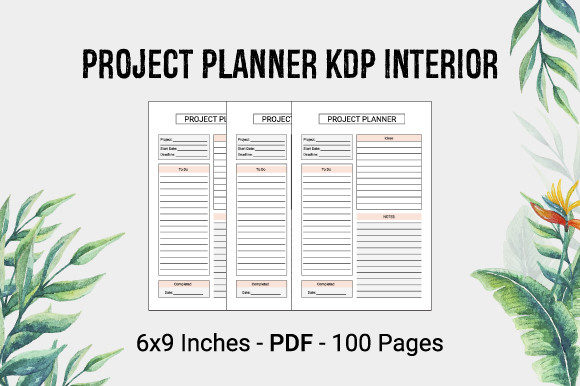
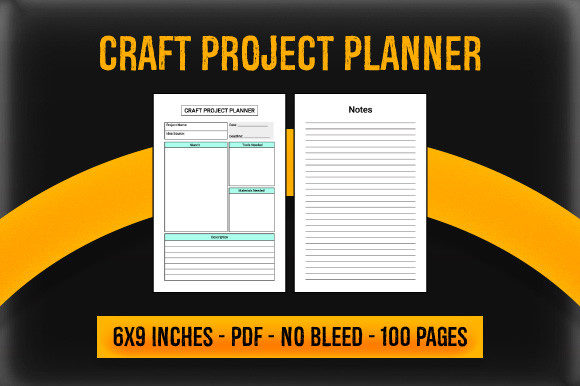
Building a sustainable income stream through Amazon Kindle Direct Publishing often comes down to volume and consistency, but creating unique interiors for every single book can quickly lead to burnout. The Craft Project Planner - KDP Interior serves as a foundational asset for publishers who want to bypass the design phase and move straight to publishing. This digital resource provides a pre-formatted, 100-page layout specifically engineered for the 6″ x 9″ trim size, which is currently one of the most popular dimensions for journals and planners in the low and no-content book category. Rather than spending hours adjusting margins or setting up bleed settings in InDesign or Canva, you receive high-resolution PDF files that are technically compliant and ready for immediate upload.
The true value of this interior lies in its versatility across different niches within the crafting community. While labeled as a craft project planner, the structured layout adapts seamlessly to various sub-niches. For example, a publisher targeting the knitting community can use this exact interior for a "Yarn Stash Tracker," while another seller might list the same file as a "Quilting Pattern Log" or a "Scrapbooking Idea Journal." The pages provide enough structure to be useful without being so specific that they alienate potential buyers outside of a narrow micro-niche. This flexibility allows you to test multiple keywords and categories using a single, high-quality asset, significantly reducing the time-to-market for new titles.
Navigating Technical Specifications for Seamless Publishing
One of the most common friction points for KDP creators is formatting errors during the upload process. Amazon’s printing specifications are strict, and even minor miscalculations in gutter margins or bleed areas can result in rejected files or poor print quality. This Craft Project Planner - KDP Interior eliminates that technical guesswork by offering distinct options for both bleed and no-bleed configurations. Understanding when to use each is critical for your book's professional appearance.
If you plan to add decorative elements, colored tabs, or background patterns that extend to the very edge of the paper, you must select the bleed version. This ensures that when the book is trimmed during manufacturing, there are no unsightly white borders left behind. Conversely, the no-bleed option is ideal for minimalist designs where all content sits safely within the safe zone, leaving a clean white margin around the page. Having both high-resolution PDF variations included means you never have to resize or reformat the document yourself. You simply choose the file that matches your cover design strategy and proceed. This technical reliability is particularly valuable for beginners who may not yet have experience with print production standards, as well as veteran publishers who want to ensure zero quality control issues across large batches of uploads.
Strategic Niche Application and Audience Targeting
Success in the POD space rarely comes from generic products; it comes from solving specific problems for specific people. When utilizing this 100-page interior, consider how different demographics interact with planning tools. A 25-year-old DIY enthusiast organizing their first apartment renovation has different needs than a 50-year-old master woodworker documenting decades of projects. The beauty of this pre-made interior is that it acts as a neutral canvas upon which you can build highly targeted marketing angles.
- For the Fiber Artist: Position the book as a project tracker for complex crochet or knitting patterns where noting yarn dye lots and gauge swatches is essential.
- For the Home Renovator: Market the interior as a budget and timeline organizer for DIY home improvement projects, focusing on the tracking aspect of the pages.
- For the Mixed Media Creator: Use the planner as a visual diary or sketch companion for artists who need to document materials used and techniques tested.
- For the Small Business Owner: Adapt the interior for Etsy sellers or craft fair vendors who need to track inventory creation, cost of goods sold, and production timelines.
By rotating these perspectives, you can create a series of books that share the same internal DNA but appeal to entirely different customer bases. This approach maximizes the return on investment for the digital file while providing genuine utility to diverse user groups.
Balancing Speed with Brand Differentiation
While the efficiency of a ready-to-use PDF is undeniable, successful publishers understand that speed should not come at the expense of brand identity. Because this Craft Project Planner - KDP Interior is a commercial-use asset, other sellers may also be using it. To stand out in a crowded marketplace, your cover design and metadata must do the heavy lifting. Think of the interior as the reliable engine of a car; it gets the vehicle moving, but the paint job, interior upholstery, and marketing brochure are what convince the buyer to take it home.
Invest time in creating custom covers that visually signal the specific niche you are targeting. If you are selling to quilters, use fabric textures and warm typography. If you are targeting modern jewelry makers, opt for sleek lines and metallic accents. Additionally, utilize the "Look Inside" feature on Amazon effectively. Since the interior is standardized, your book description should clearly explain how the pages serve the specific user. Don't just say "100 pages"; describe the workflow the planner enables. Explain that the layout helps prevent forgotten project details or assists in calculating material costs. This contextual framing transforms a generic PDF into a specialized tool in the eyes of the consumer.
Practical Considerations Before You Publish
Before adding this asset to your publishing queue, assess your current portfolio strategy. The 6″ x 9″ dimension is excellent for portability and fits comfortably in most bags, making it ideal for crafters who work on the go or attend classes. However, if your target audience primarily works at a large studio table and prefers expansive workspace, you might eventually want to supplement this with larger formats. That said, for building initial momentum and testing niche viability, this size is often the safest entry point due to lower printing costs and higher perceived value as a portable reference guide.
Also, consider the page count relative to price point. At 100 pages, this interior hits a sweet spot for paperback pricing. It is substantial enough to justify a mid-range price tag without driving printing costs so high that your royalty margin evaporates. Always run the numbers through the KDP royalty calculator before finalizing your list price. Ensure that the cost of printing the high-resolution PDF leaves you with a healthy profit margin, especially if you plan to run Amazon Ads. The goal is to leverage the time savings of this pre-made interior to focus more energy on keyword research, ad optimization, and customer engagement, which are ultimately the levers that drive long-term sales velocity in the competitive world of print-on-demand publishing.