Cash Flow Logbook KDP Interior Design Guide
Launching a profitable low-content publishing business often hinges on the quality and utility of your internal pages. For entrepreneurs and small business owners seeking financial clarity, a well-structured ledger is not just a notebook; it is an essential operational tool. The Cash Flow Logbook KDP Interior serves this specific niche by providing a pre-formatted, professional framework that transforms blank paper into a valuable asset. This ready-to-use PDF file eliminates the most time-consuming phase of self-publishing: layout design. Instead of spending hours adjusting margins or creating table grids in design software, publishers can focus entirely on cover creation and marketing strategy.
The visual personality of this interior leans heavily into functional minimalism. In the realm of editorial design for financial tools, aesthetics must always serve readability. A cluttered page creates cognitive load, making data entry tedious and error-prone. This 100-page template utilizes clean lines and ample white space to guide the user’s eye naturally across columns and rows. The typography employed within these interiors typically relies on high-legibility sans serif fonts or structured serif typefaces that maintain clarity even at smaller point sizes. This attention to modern typography ensures that the logbook feels authoritative and trustworthy, qualities that are non-negotiable when dealing with money management resources.
Technical Specifications and Print Readiness
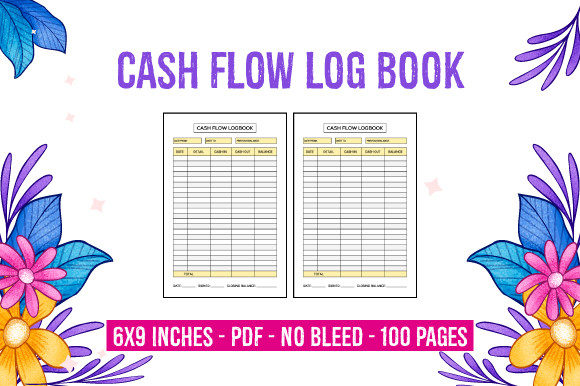
Understanding the technical parameters of this digital asset is crucial for avoiding common printing errors. The included files are sized at 6″ x 9″ inches, which is arguably the most versatile trim size for business journals. It offers enough surface area for detailed transaction logging while remaining portable enough to fit in a briefcase or desk drawer. Crucially, the package includes both bleed and no-bleed variations. This distinction matters significantly for Amazon KDP compliance. If you plan to extend background colors or border elements to the very edge of the page, the bleed version provides the necessary safety margin. For standard black-and-white interiors where content stays within safe zones, the no-bleed option prevents accidental cropping during the trimming process.
The resolution of these PDF files meets professional print standards, ensuring crisp text and sharp grid lines. Blurry tables or pixelated headers immediately signal low quality to potential buyers, leading to returns and negative reviews. By utilizing high-resolution source files, publishers guarantee that every line weight and character renders perfectly on both cream and white paper stocks. This level of polish elevates the perceived value of the final product, distinguishing it from amateur competitors who may have used low-quality screenshots or compressed images for their interiors.
Strategic Applications Across Niches
While the primary function is tracking income and expenses, the versatility of this Cash Flow Logbook KDP Interior extends far beyond basic accounting. Creative professionals, freelancers, and gig economy workers often struggle with separating personal and business finances. This logbook provides a dedicated physical space for that separation, serving as a tangible boundary between revenue streams. Real estate investors might use it to track property-specific cash flow, while crafters and Etsy sellers can monitor material costs against sales revenue. The generic yet structured nature of the layout allows it to adapt to various sub-niches without requiring modification.
From a branding perspective, the neutral interior acts as a canvas for diverse cover strategies. Because the inside pages are universally applicable, you can create multiple listings targeting different audiences using the same core file. A sleek, minimalist cover might target corporate consultants, while a floral script font cover could appeal to home-based bakers. The consistency of the interior builds trust; if a customer buys one version and likes the layout, they are likely to purchase another for a different purpose. This cross-pollination is difficult to achieve if every book has a radically different internal structure. The standardized format becomes part of your brand identity, signaling reliability and thoughtful design to your readership.
Evaluating Typography and Layout Hierarchy
Even though the interior is pre-made, understanding why it works helps in selecting complementary cover fonts and marketing graphics. The internal layout establishes a clear visual hierarchy through spacing and alignment rather than decorative elements. Headers are distinct but unobtrusive, allowing the user's handwriting to take center stage. When designing your cover, consider how external typography interacts with this internal promise. A display font on the cover should suggest organization and precision, mirroring the structured environment inside. Avoid overly chaotic handwritten fonts on the cover unless they are highly legible, as they might contradict the orderly expectation set by the logbook pages.
Readability considerations also extend to binding and gutter margins. Financial logbooks are reference materials that users return to frequently. They need to lay relatively flat and remain readable near the spine. The 6x9 dimensions included in this package account for standard KDP gutter requirements, ensuring that writing space isn't lost in the binding. This practical foresight demonstrates an understanding of user experience that goes beyond mere graphic design. When evaluating any commercial font or layout asset for future projects, always test print a few pages first. Screen rendering differs vastly from ink-on-paper reality, especially regarding contrast and line thickness. What looks bold on a monitor might appear faint in print, potentially compromising the utility of the logbook.
Maximizing Value Through Commercial Licensing
For publishers managing a portfolio of titles, efficiency is the metric of success. This ready-to-use PDF operates under terms that typically allow for unlimited commercial use across multiple publications, though verifying specific license details is always recommended. This scalability transforms a single design asset into a foundational element of a broader publishing strategy. Rather than paying per-project fees or hiring designers for repetitive layouts, you invest once in a premium resource that generates recurring value. This approach aligns with sustainable business practices, reducing overhead while maintaining output quality.
The true measure of this interior’s worth lies in its ability to solve problems for the end-user. Adults aged 20 to 50 are increasingly seeking analog solutions to digital fatigue. Writing down transactions forces mindfulness and retention in ways that apps cannot replicate. By providing a flawless vessel for this habit, your publication supports financial wellness and organizational discipline. The design assets you choose directly impact whether that support system functions smoothly. A poorly aligned column frustrates users; a well-balanced grid empowers them. In the competitive landscape of Amazon KDP, superior usability driven by intelligent design is often the deciding factor between a bestseller and obscurity. Focus on delivering genuine utility through professional-grade interiors, and the market recognition will follow naturally.