Prayers Journal for Women KDP Interior: Design, Utility, and Publishing Essentials
In the expansive world of low-content publishing, finding a niche that balances aesthetic appeal with genuine utility is paramount for success. The Prayers Journal for Women - Kdp Interior represents a specific intersection of faith-based content and visual artistry that resonates deeply with a dedicated audience. Unlike generic lined notebooks, this specialized interior offers a structured yet creative space for spiritual reflection, making it a valuable asset for both self-publishers looking to expand their catalog and consumers seeking meaningful tools for their daily devotionals. Understanding the technical specifications and emotional resonance of this product is essential for anyone involved in its creation, marketing, or use.
The Intersection of Faith and Aesthetics in Journaling
Spiritual journaling has evolved significantly over the past decade. It is no longer confined to plain text on white paper; it has become a multisensory experience where visual beauty enhances spiritual focus. The Prayers Journal for women with watercolor flowers kdp interiors capitalizes on this trend by integrating soft, organic imagery with structured prayer prompts. Watercolor florals are particularly effective in this context because they convey gentleness, growth, and natural beauty—themes often associated with feminine spirituality and mindfulness.
For the end-user, these visuals serve a psychological purpose. They lower the barrier to entry for writing. A blank page can be intimidating, especially when one is struggling to articulate complex emotions or prayers. The presence of delicate floral borders and artistic backgrounds provides a welcoming canvas that encourages consistency. For the publisher, this aesthetic choice signals quality and intentionality. It differentiates the book from mass-produced alternatives and suggests that the interior was designed with the user's emotional state in mind.
Technical Specifications and Print Quality Standards
Creating a high-quality KDP interior requires strict adherence to technical standards to ensure the final physical product meets consumer expectations. This specific journal template is engineered at Size 6x9 300 DPI, which is the industry gold standard for print-on-demand books. While some creators attempt to save file size by using 72 or 150 DPI images, this results in pixelation and blurriness when printed. At 300 DPI, the watercolor details remain crisp, and the gradients appear smooth rather than banded.
The 6x9 trim size is arguably the most versatile format for journals. It is portable enough to fit in a handbag or nightstand drawer yet offers sufficient surface area for writing without feeling cramped. When utilizing this interior, publishers must also consider bleed settings. If the watercolor elements extend to the edge of the page, the file must include an extra 0.125 inches on the top, bottom, and outside edges to account for trimming variances during the manufacturing process. Failure to account for this can result in unwanted white borders or cropped artwork.
Structural Breakdown: Maximizing the 100-Page Count
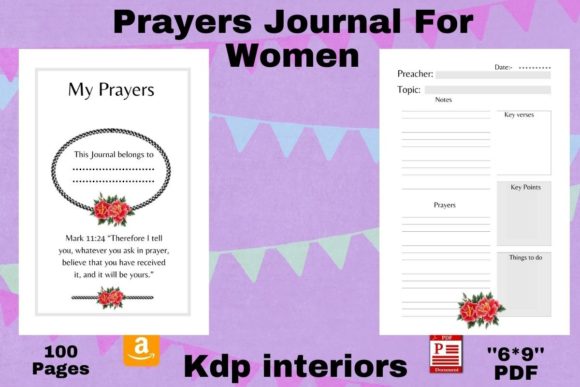
Efficiency in page count directly correlates to printing costs and perceived value. This interior is meticulously organized into 100 Pages, a sweet spot that keeps the spine width substantial enough for legible text while maintaining an affordable price point. The structure is not random; it follows a user-centric flow designed to enhance the journaling habit.
- Ownership Page: The inclusion of 1 belongs to page at the very beginning serves multiple functions. Practically, it identifies the owner if the journal is lost. Emotionally, it acts as a dedication ceremony, marking the book as a personal sanctuary before the first prayer is even written.
- Core Content: The bulk of the book consists of 98 prayer interiors. This repetition creates a ritualistic framework. Users know exactly what to expect when they open the book, which reduces cognitive load and facilitates habit formation.
- Closing Space: The 1 last blank page is a thoughtful addition often overlooked in amateur designs. It serves as a buffer zone for notes, a place to paste a meaningful scripture, or simply a protective layer to prevent ink bleed-through from the final prayer page affecting the back cover.
Practical Applications and User Scenarios
Understanding who uses this journal and how they use it is critical for effective positioning. The Prayers Journal for Women - Kdp Interior is versatile enough to serve various segments of the faith-based market. It is frequently utilized in women’s ministry groups as a unified tool for study, allowing members to share a common structure while maintaining private reflections. Gift-givers also favor this format for occasions like baptisms, confirmations, Mother’s Day, or as part of a "new believer" welcome kit.
From a creator's perspective, this interior solves the problem of design fatigue. Developing 98 unique, cohesive layouts is time-consuming and technically demanding. By utilizing a pre-formatted interior that already accounts for margins, gutters, and aesthetic consistency, publishers can focus their energy on cover design and keyword research. However, it is vital to add unique value. Simply uploading a stock interior without customization can lead to duplicate content issues. Successful publishers often modify the title page, add unique introductory content, or create a custom cover that perfectly complements the internal watercolor theme to ensure their listing stands out.
Evaluating Suitability for Your Publishing Goals
While this interior offers significant advantages, it is not a universal solution. Publishers must evaluate whether it aligns with their brand and audience needs. One primary consideration is the opacity of KDP standard color paper. Watercolor designs often involve light washes and subtle colors. Creators should order a proof copy to verify that the background tints do not interfere with handwriting legibility. If the floral elements are too dark or saturated, users may find it difficult to write over them, negating the journal's utility.
Additionally, consider the competitive landscape. The "prayer journal" niche is mature. To succeed with this interior, one must identify sub-niches. Does the watercolor style lean towards vintage botanicals, modern abstract florals, or tropical arrangements? Each appeals to a different demographic. Matching the interior art style to a specific cover aesthetic and target keyword set is essential for conversion. A vintage floral interior paired with a minimalist modern cover will confuse buyers and increase return rates.
Navigating Limitations and Best Practices
Potential users and creators should also be aware of inherent limitations. As a low-content book, the value proposition relies heavily on the user's willingness to engage with the prompts. Unlike a guided devotional with theological teaching, this journal is a vessel. Marketing copy must clearly communicate this distinction to avoid customer disappointment. Descriptions should highlight the space for reflection rather than implying the presence of instructional content.
Furthermore, when working with Prayers Journal for Women - Kdp Interior files, always verify licensing rights. Ensure that the watercolor assets used within the interior are cleared for commercial KDP use. Some designers sell interiors for personal use only, which prohibits resale on Amazon. Always retain documentation of commercial licenses to protect your publishing account from potential copyright claims.
Enhancing the User Experience Through Design Intent
Ultimately, the success of any KDP interior lies in its ability to facilitate a meaningful experience. The combination of structured prayer prompts and soothing watercolor art addresses the holistic needs of the user. It acknowledges that spiritual practice is both disciplined and beautiful. For the publisher, respecting this dynamic means treating the interior not just as a product to be sold, but as a tool to be cherished.
When evaluating this specific 100-page template, look for balance. Are the lines spaced appropriately for average handwriting? Is there adequate margin space so text doesn't disappear into the gutter binding? Do the watercolor elements frame the content without overwhelming it? These micro-decisions define the quality gap between a bestseller and a forgotten listing. By prioritizing these functional aesthetics, creators can offer a Prayers Journal for Women - Kdp Interior that truly serves its intended purpose, fostering a deeper connection between the user and their faith through the tangible act of writing.
In conclusion, whether you are a seasoned self-publisher expanding your portfolio or a new creator entering the faith-based niche, this interior provides a robust foundation. Its technical compliance, aesthetic appeal, and thoughtful pagination make it a strong contender in the marketplace. However, long-term success requires more than just uploading a file; it demands a commitment to quality verification, niche alignment, and an understanding of the end-user's spiritual journey. When executed with care, this journal becomes more than paper and ink—it becomes a companion in daily grace.