Accelerate Your KDP Business with Ready-to-Use Daily Wellness Journal Interiors
The self-publishing landscape has evolved dramatically over the last decade, transforming from a niche hobby into a legitimate business model for entrepreneurs worldwide. Amazon Kindle Direct Publishing (KDP) remains at the forefront of this revolution, particularly in the low-content and no-content book categories. Among these, wellness journals have emerged as a perennial bestseller, driven by a global surge in mindfulness, mental health awareness, and personal development. However, for many creators, the bottleneck is not the idea but the execution. Designing a professional, functional interior from scratch requires time, software proficiency, and an understanding of print specifications. This is where pre-made Daily Wellness Journal KDP Interiors change the game.
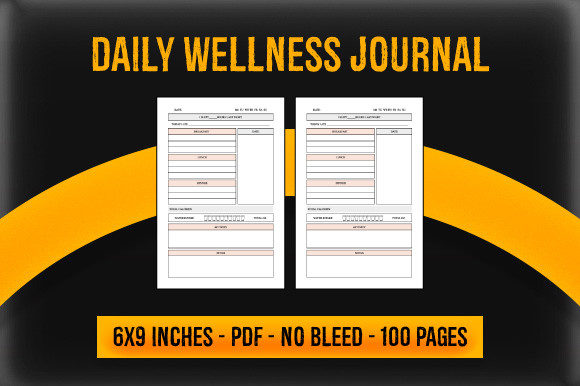
For publishers looking to scale their portfolio without sacrificing quality, ready-to-use PDF files offer a strategic advantage. These digital assets are specifically engineered for Print on Demand (POD), allowing you to bypass the design phase entirely. With a standardized 6″ x 9″ dimension, 100 pages of structured content, and high-resolution formatting, these interiors provide a "plug-and-play" solution. You simply add a unique cover and publish. Understanding how to leverage these resources effectively is key to building a sustainable and profitable KDP business in the competitive wellness niche.
Understanding the Role of Low-Content Books in Modern Publishing
To fully appreciate the value of a pre-formatted wellness journal interior, one must first understand the ecosystem of low-content publishing. Unlike traditional novels or non-fiction books that rely heavily on word count, low-content books derive their value from utility and structure. They are tools designed to facilitate a specific user experience, whether that is tracking habits, recording gratitude, or managing anxiety.
In the context of modern life, where digital fatigue is rampant, physical journals offer a tactile respite. Readers and consumers are actively seeking analog solutions to manage their digital-heavy lives. A well-designed wellness journal serves as a daily anchor, providing a dedicated space for reflection that apps cannot replicate. For the KDP publisher, this represents a unique intersection of creativity and commerce. You are not just selling paper and ink; you are selling a framework for better living. By utilizing ready-made interiors, you align your business with this consumer need while minimizing the technical barriers to entry.
Why the 6x9 Inch Format is the Industry Standard
When selecting KDP interiors, dimensions matter significantly. The included 6″ x 9″ inch format is not an arbitrary choice; it is the gold standard for trade paperbacks and journals for several practical reasons:
- Portability: This size fits easily into handbags, backpacks, and nightstand drawers, encouraging daily use rather than shelf-sitting.
- Printing Costs: On Amazon KDP, printing costs are calculated based on page count and trim size. The 6x9 format offers an optimal balance of perceived value and production cost, allowing for healthier royalty margins.
- User Expectation: Consumers associate this trim size with professional journals and workbooks. Deviating to obscure sizes can sometimes signal "amateur" to savvy buyers unless there is a specific artistic reason.
By adhering to this standard dimension, the ready-to-use PDF files ensure your product meets market expectations immediately upon publication.
Technical Specifications: Bleed vs. No Bleed Explained
One of the most common stumbling blocks for new KDP publishers is understanding print terminology, specifically "bleed." The Daily Wellness Journal interiors described here come with clear specifications regarding bleed settings, which is crucial for avoiding rejected manuscripts or poor print quality.
No Bleed means that all text and graphics stay within the safe margin area, leaving a white border around the edge of the page after trimming. This is often preferred for minimalist journals, lined notebooks, and text-heavy prompts because it guarantees that no content is accidentally cut off during the manufacturing process. It provides a clean, classic look that appeals to users who write extensively.
Conversely, Bleed allows images or background colors to extend beyond the trim line. While visually striking, bleed requires precise file setup. Having access to high-resolution PDF files that are already correctly formatted for either option eliminates the guesswork. When you download a ready-to-use interior, the margins and safe zones are pre-calculated. This technical assurance allows you to focus on marketing and keyword research rather than measuring millimeters in design software.
The Strategic Value of 100 Pages
The 100-page count included in these interiors is strategically significant for both the user and the publisher. From a user perspective, 100 pages provides enough substance to feel like a substantial purchase without being intimidating. It typically equates to three months of daily entries or a focused 90-day challenge, which aligns perfectly with habit-formation psychology.
From a business perspective, this page count sits in a sweet spot for profitability. It is thick enough to justify a premium price point compared to thinner notebooks, yet thin enough to keep printing costs low. Furthermore, having a consistent page count across multiple titles simplifies inventory management and series planning. If you are creating a "Wellness Series," maintaining uniformity in page count creates a cohesive brand identity on your Amazon author page.
Streamlining the Workflow: From Download to Publish
The primary benefit of acquiring ready-to-use KDP interiors is workflow efficiency. In the Print on Demand business, speed of implementation often correlates with success. Testing niches requires volume, and designing unique interiors for every test is unsustainable. Here is how these digital files optimize the publishing pipeline:
- Niche Validation: Instead of spending 10 hours designing a journal for a specific sub-niche (e.g., "Postpartum Wellness" or "Mindfulness for Teachers"), you can utilize a generic wellness interior to test demand quickly.
- Cover Focus: Since the interior is solved, you can dedicate 100% of your creative energy to the cover. In KDP, the cover is the primary conversion driver. A beautiful interior means nothing if the cover doesn't get the click.
- Scalability: You can publish multiple variations of the same core product by simply changing the cover art and title keywords, targeting different demographics with the same high-quality internal structure.
This approach shifts the entrepreneur’s role from "graphic designer" to "product manager," allowing for a more strategic oversight of the business.
Customization and Avoiding Duplicate Content Issues
A common concern among KDP publishers using pre-made interiors is the issue of duplicate content. Amazon values unique customer experiences, and uploading identical files repeatedly can lead to account warnings. However, ready-to-use interiors are designed as foundations, not final products.
To maintain compliance and add value, consider these ethical customization strategies:
- Add Proprietary Front Matter: Insert a personalized introduction, a "How to Use This Journal" guide, or affirmation cards specific to your brand voice.
- Mix and Match: Combine different interior elements or alternate prompt pages to create a unique sequence that differs from other sellers using similar base files.
- Branding Elements: Add subtle logos, website URLs, or QR codes linking to complementary digital resources or communities.
By treating the 100-page PDF as a canvas rather than a finished painting, you ensure your book remains distinct and valuable to the end reader while adhering to platform guidelines.
E-E-A-T in Digital Products: Quality Matters
In the realm of SEO and digital sales, Experience, Expertise, Authoritativeness, and Trustworthiness (E-E-A-T) apply to product quality as much as content. High-resolution PDF files are non-negotiable. Blurry lines, pixelated text, or gray-scale gradients that print as muddy black bars destroy trust and result in negative reviews.
The specified high-resolution PDF files in this package address this critical quality metric. Professional-grade interiors ensure crisp lines and readable text, which directly impacts customer satisfaction. When a user opens your journal and sees clean, sharp printing, they perceive higher value. This leads to better organic rankings through positive feedback loops. Remember, in the POD business, the interior is the product; the cover is merely the packaging. Investing in technically sound source files is an investment in your brand's long-term reputation.
Building a Sustainable Passive Income Stream
Ultimately, the goal of utilizing Daily Wellness Journal KDP Interiors is to build a resilient income stream. The wellness niche is evergreen; people will always seek ways to improve their mental and physical health. By leveraging ready-to-use assets, you reduce the friction associated with entering this lucrative market.
Success in this space does not come from finding a "magic bullet" but from consistent, high-quality output. These interiors provide the consistency. They allow you to show up regularly in the marketplace with professional products, building authority over time. Whether you are a seasoned publisher looking to outsource design or a beginner taking your first steps, understanding and utilizing these tools correctly bridges the gap between aspiration and published reality. The combination of correct dimensions, proper technical specs, and strategic application forms the bedrock of a thriving KDP enterprise.