Streamlining KDP Publishing with Ready-to-Use Project Planner PDF Interiors
The barrier to entry in the self-publishing world has never been lower, yet the competition for visibility on Amazon has never been higher. For creators focusing on no-content and low-content books, success often hinges not just on finding a niche, but on the speed of execution and the quality of the user experience inside the book. This is where high-quality, ready-to-use digital assets become indispensable. Specifically, a professionally designed Project Planner interior serves as a cornerstone asset for publishers looking to dominate the productivity and organization category without spending weeks designing layouts from scratch.
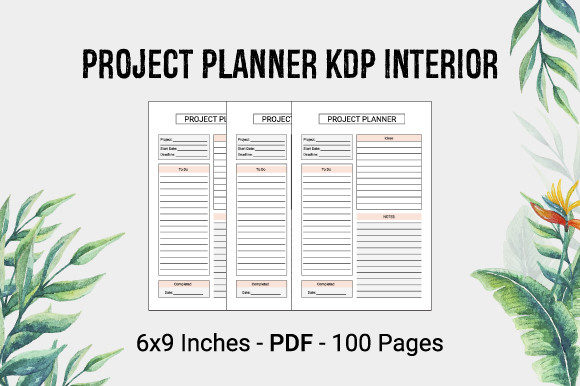
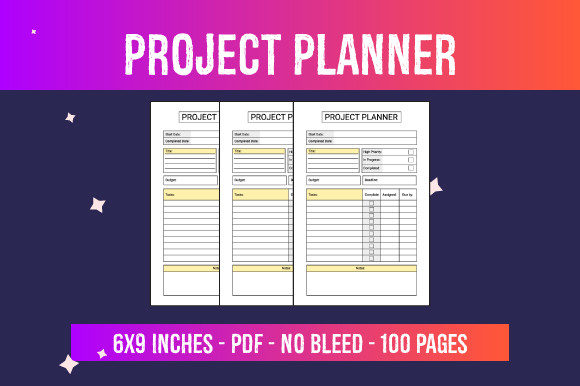
When you utilize pre-formatted PDF files tailored for Print on Demand (POD), you are essentially bypassing the technical learning curve of book formatting. Instead of wrestling with margin settings, gutter space, and bleed requirements in complex design software, you can focus entirely on market research and cover design. A 100-page project planner interior, sized at the industry-standard 6″ x 9″, offers the perfect balance of portability and functionality that modern consumers demand. It transforms a generic notebook into a purposeful tool, increasing perceived value and justifying a higher price point compared to standard lined journals.
Technical Precision in Pre-Made Interiors
One of the most frequent reasons for rejection or poor customer reviews in the KDP space is formatting errors. Text getting cut off during printing or lines disappearing into the binding gutter can ruin a brand's reputation instantly. Ready-to-use PDF files eliminate this risk by adhering to strict POD manufacturing standards. When selecting a Project Planner template, understanding the technical specifications is vital for ensuring a seamless publishing process.
- Optimized Dimensions: The 6″ x 9″ trim size is the gold standard for trade paperbacks and journals. It fits comfortably in bags and backpacks, making it ideal for professionals and students who need their project planner on the go. This size also maximizes shelf presence without appearing too bulky.
- Bleed vs. No Bleed Options: High-quality digital assets typically provide both variations. A "No Bleed" version keeps all content safely within the margins, which is safer for beginners and ensures critical writing spaces are never trimmed. Conversely, a "Bleed" option allows graphics or background elements to extend to the very edge of the page, offering a more premium, custom-printed aesthetic for advanced sellers.
- High-Resolution Clarity: Crisp lines and legible text are non-negotiable. Low-resolution files result in pixelated prints that look unprofessional. Premium PDF interiors are generated at 300 DPI or higher, ensuring that every checkbox, line, and header in your project planner looks sharp and intentional.
- Page Count Efficiency: A 100-page count is strategically significant. It provides substantial utility for tracking multiple projects over several months while keeping the book spine thick enough to accommodate readable title text. This thickness signals quality to buyers browsing physical shelves or viewing thumbnail images online.
Functional Design Enhances User Retention
In the realm of low-content publishing, the interior is the product. While the cover attracts the click, the interior secures the sale and generates future loyalty. A generic lined journal has limited utility, but a structured Project Planner solves a specific problem. Buyers are not just purchasing paper; they are buying a system for organizing their thoughts, tasks, and goals.
Effective planner interiors guide the user through a logical workflow. They might include sections for goal breakdown, task prioritization, timeline visualization, and reflection. When you use a ready-made PDF, you leverage design psychology that has already been tested. The layout encourages consistent use, which leads to better reviews. Customers often mention in their feedback whether a planner was "easy to use" or "helped them stay organized." These keywords drive organic ranking far more effectively than backend keywords alone. By providing a functional framework rather than blank space, you elevate your book from a simple stationery item to a personal development tool.
Adapting Assets for Niche Specificity
A common misconception is that using ready-to-use files results in identical products across the marketplace. However, experienced publishers treat these PDFs as foundational layers rather than final products. The versatility of a standard Project Planner allows for significant customization through branding and cover alignment.
Consider how the same 100-page interior can serve vastly different audiences based on external positioning. With a minimalist, corporate-style cover, it becomes an executive business organizer. With vibrant, illustrative artwork, it transforms into a creative project tracker for artists or writers. With soft, calming colors, it appeals to wellness coaches or teachers planning their curriculum. The interior remains constant, saving you hours of repetitive design work, while the cover and metadata target distinct micro-niches. This modular approach to publishing allows for rapid portfolio expansion and A/B testing of different market segments without reinventing the wheel for every new title.
Accelerating Time-to-Market in Competitive Niches
Speed is a critical factor in POD businesses. Trends emerge and fade quickly, and seasonal opportunities like back-to-school or New Year resolutions have narrow windows. Designing a comprehensive planner from zero can take dozens of hours when factoring in drafting, proofing, and formatting. Utilizing a pre-designed Project Planner reduces this timeline to mere minutes.
This efficiency does not imply cutting corners; rather, it reallocates resources. The time saved on interior design can be invested in creating superior covers, writing compelling book descriptions, conducting deeper keyword research, or running advertising campaigns. In many cases, the quality of a professionally designed template exceeds what a solo publisher could achieve independently, especially those without extensive graphic design backgrounds. The consistency of spacing, font hierarchy, and visual balance in a premium PDF creates a polished user experience that builds trust with potential buyers immediately upon opening the "Look Inside" preview on Amazon.
Evaluating Quality Before Purchase
Not all digital assets are created equal. When sourcing a Project Planner or any KDP interior, due diligence is necessary to ensure the file meets professional standards. Publishers should verify that the PDF includes proper safe zones to prevent content loss during trimming. It is also wise to check if the license permits commercial use and unlimited publications, as some designers restrict the number of times a file can be used.
Additionally, examine the usability of the layout itself. Are the writing lines spaced appropriately for handwriting? Is there adequate white space to prevent the page from feeling cluttered? Does the design account for the curvature of the book near the spine? A high-quality asset provider will have already solved these ergonomic issues. Testing a sample print before launching is always recommended to validate that the digital file translates perfectly to the physical product. This step ensures that the 6″ x 9″ dimensions feel right in hand and that the 100-page structure flows logically for the end-user.
Building a Sustainable Publishing Workflow
Integrating ready-to-use PDFs into your business model supports scalability. As your catalog grows, maintaining consistent quality becomes challenging if every book is custom-designed. Standardized interiors like a reliable Project Planner create a baseline of quality across your brand. Readers who enjoy one of your planners are likely to purchase others if they recognize the familiar, user-friendly layout structure.
Furthermore, these assets facilitate cross-promotion. You can bundle related concepts or create series that share the same internal architecture but cater to different demographics. This cohesion strengthens brand identity in a marketplace often saturated with disjointed, one-off products. Ultimately, the goal is to build a library of evergreen assets that generate passive income for years. A well-formatted, high-resolution project planner interior is not just a file; it is a reusable infrastructure that supports long-term growth in the dynamic world of self-publishing.