Streamlining KDP Publishing with a Ready-to-Use Donations Tracker Log Sheet Journal Interior
The landscape of Amazon Kindle Direct Publishing (KDP) has shifted dramatically in recent years. While the barrier to entry remains low, the standard for quality has risen significantly. Publishers can no longer rely on generic, repetitive lined pages to generate consistent sales. Success in the low and no-content book niche now hinges on specificity and utility. This is where specialized interiors like the Donations Tracker Log Sheet Journal become invaluable assets for creators looking to serve distinct audiences rather than competing in oversaturated general markets.
For publishers utilizing Print on Demand (POD) models, time is often the most significant bottleneck. Creating a functional, aesthetically pleasing interior from scratch requires design skills, software proficiency, and hours of formatting. Utilizing a pre-formatted, high-resolution PDF file eliminates this friction. When you have a 100-page interior ready to go, the publishing workflow transforms from a week-long design project into a same-day listing task. This efficiency allows for greater portfolio diversification, enabling publishers to test multiple niches without exhausting their creative resources.
Understanding the Niche Utility of Donation Tracking
To market a logbook effectively, one must understand why a customer needs it. A Donations Tracker Log Sheet Journal is not merely a notebook; it is a compliance and organization tool. Individuals and small organizations use these journals to maintain meticulous records of charitable giving for tax purposes, grant reporting, or personal budgeting. Unlike digital apps, physical logs offer a tangible sense of security and permanence that many traditional donors prefer.
This specific interior caters to several distinct user personas. Religious organizations often require physical ledgers for tithes and offerings. Non-profit volunteers need to track in-kind donations separately from monetary contributions. Individual taxpayers use them to substantiate deductions during audit seasons. By providing a structured layout designed specifically for these data points, the journal solves a genuine pain point. The value proposition shifts from "blank paper" to "organized financial peace of mind," which justifies a higher price point and improves conversion rates.
Technical Specifications That Ensure Print Quality
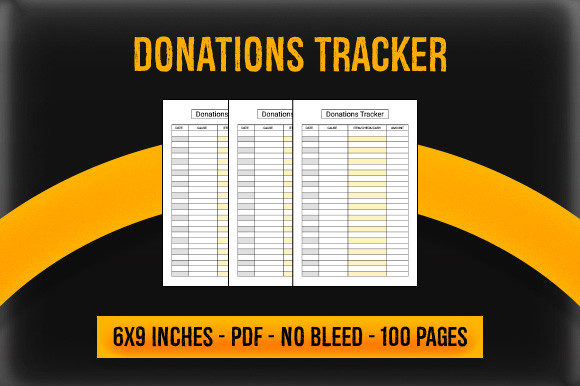
In the POD ecosystem, technical accuracy is non-negotiable. A beautifully designed interior that fails Amazon’s automated review process is useless. This ready-to-use file addresses the most common rejection triggers through precise engineering. The dimensions are set to the industry-standard 6″ x 9″ inches, a trim size that balances portability with adequate writing space. This size is versatile enough to fit on a bookshelf yet compact enough for a desk drawer or glove compartment.
Crucially, the file is configured as No Bleed. For logbooks and journals containing text, tables, and form fields, keeping all content within the safe margin is essential. Bleed settings can sometimes cause critical information to be trimmed off during the binding process if margins aren't calculated perfectly. A no-bleed configuration ensures that every header, column line, and instruction remains fully visible and legible after printing. This conservative approach to formatting significantly reduces the risk of proof copy failures and customer returns due to printing errors.
The resolution of the source file directly impacts the perceived quality of the final product. Low-resolution vectors or rasterized images result in fuzzy lines and gray-scale text that looks unprofessional. These interiors are provided as High-Resolution PDF files, ensuring crisp, black-and-white contrast. Sharp lines are particularly important for log sheets where users need to write clearly within confined spaces. When the printed output looks professional, reviews improve, and the book establishes authority in its niche.
Integrating Pre-Made Interiors into Modern Workflows
The primary advantage of acquiring a 100-page KDP interior is the immediate integration into existing publishing pipelines. Modern KDP businesses operate on volume and velocity. Spending twenty hours designing a donation tracker is inefficient when that time could be spent on keyword research, cover design, or advertising. These files act as plug-and-play components.
Consider the typical launch cycle. With a custom design, the timeline includes drafting, prototyping, proofing, and correcting. With a ready-to-use PDF, the timeline collapses:
- Cover Creation: Design a cover that matches the 6x9 no-bleed specifications.
- File Upload: Upload the pre-formatted interior PDF directly to KDP.
- Metadata Entry: Input relevant keywords and categories.
- Publishing: Submit for review immediately.
This streamlined process supports an agile business model. Publishers can react quickly to seasonal trends. For example, demand for donation trackers often spikes toward the end of the fiscal year or during holiday giving seasons. Having the interior ready allows for rapid deployment to capture this temporal traffic. Furthermore, because the interior is neutral and functional, it can be repurposed across multiple covers targeting different sub-niches—one cover for church treasurers, another for individual tax filers, and another for charity shop managers—all using the same core 100-page file.
Design Considerations for Functional Journals
While the interior is pre-made, understanding its structural logic helps in creating better marketing materials and covers. A high-quality Donations Tracker Log Sheet Journal typically includes more than just empty tables. Effective interiors incorporate elements that guide the user. This might include a yearly summary page, space for donor contact information, columns for date, description, fair market value, and receipt numbers.
The 100-page count is strategically chosen. It provides substantial capacity for long-term tracking without making the book excessively thick or expensive to print. In the POD world, page count correlates directly to printing costs and minimum list prices. One hundred pages keeps the production cost low, allowing for competitive pricing while maintaining a healthy royalty margin. It also prevents the "intimidation factor" associated with massive ledgers; users feel they can realistically fill out a 100-page journal, whereas a 300-page tome might feel like a chore.
Evaluating Quality Before Publication
Not all pre-made interiors are created equal. When selecting a file for your KDP business, scrutiny is required. Beyond the basic specs of 6x9 and high resolution, examine the usability of the layout. Are the writing lines spaced appropriately for handwriting? Is there sufficient gutter margin so that writing near the spine isn't obscured by the binding? Does the table structure align logically with how people actually record donations?
User experience dictates review scores. If a customer buys a donation tracker but finds the columns too narrow to write dollar amounts in, they will leave negative feedback regardless of how beautiful the cover is. The best ready-to-use files prioritize function over decoration. They leave ample white space and use clean, sans-serif fonts that don't compete with handwritten entries. Before publishing, always order a physical proof or use the KDP previewer meticulously to verify that the digital file translates correctly to the printed page.
Additionally, consider the licensing terms. Ensure the digital file grants commercial rights for unlimited prints on POD platforms. Reputable providers of KDP interiors explicitly state that their files are cleared for Amazon KDP use. This legal clarity protects your publishing account from intellectual property disputes and ensures your business remains sustainable.
Maximizing the Value of Digital Assets
Treating a Donations Tracker Log Sheet Journal interior as a static asset limits its potential. Savvy publishers view it as a foundation. While the instructions say "just add a cover and publish," adding unique value can differentiate your listing. You might bundle the digital purchase with a link to a free downloadable spreadsheet version, or include a QR code inside the book linking to relevant tax resources. These small additions leverage the base interior to create a premium product.
The economics of no-content publishing favor those who minimize upfront costs while maximizing perceived value. A professionally formatted, 100-page, high-resolution PDF represents a significant saving in both money and time compared to hiring a freelancer or learning InDesign. By leveraging these ready-to-use assets, publishers can focus their energy on the aspects of the business that algorithms cannot automate: understanding customer needs, crafting compelling listings, and building a brand that readers trust. In a marketplace crowded with mediocrity, offering a precisely engineered, highly functional tool is the surest path to standing out.