Inventory Logbook: Strategic Implementation for KDP and POD Publishers
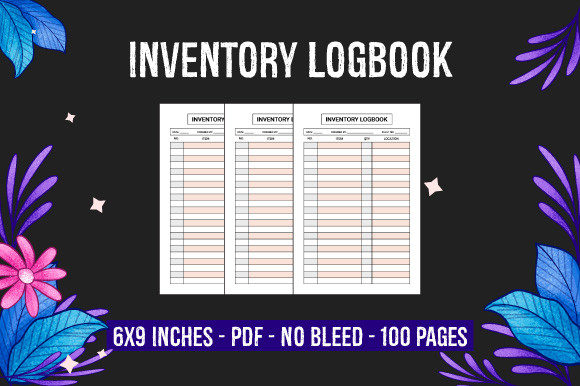
The foundation of a sustainable Print on Demand (POD) or Amazon Kindle Direct Publishing (KDP) business lies not merely in creative cover design, but in the functional utility of the interior. For publishers targeting the B2B sector, small business owners, and logistics professionals, an Inventory Logbook represents a high-value niche asset. Unlike generic journals, this tool solves a specific operational pain point: tracking stock levels, managing assets, and maintaining audit trails without relying on complex digital software. When utilizing ready-to-use PDF files for journal interiors, specifically those formatted at 6″ x 9″ inches with 100 pages and no bleed, publishers can bypass technical formatting hurdles and focus entirely on market positioning and keyword strategy.
This digital asset is engineered for immediate deployment. The included high-resolution PDF files are pre-formatted to meet strict KDP printing standards, eliminating common rejection errors related to margins or resolution. However, possessing the file is only the first step. Strategic success requires understanding how end-users interact with physical inventory tracking tools and why they continue to prefer analog methods in an increasingly digital landscape. By aligning your publishing strategy with these practical realities, you transform a simple PDF into a recurring revenue stream that serves a genuine market need.
Defining the Strategic Utility of Physical Inventory Tracking
To effectively market an Inventory Logbook, one must understand its role in modern operations. While enterprise resource planning (ERP) systems dominate large-scale logistics, small businesses, home-based entrepreneurs, and field technicians often find digital solutions cumbersome or cost-prohibitive. A physical logbook offers tactile immediacy and reliability that apps cannot replicate. It serves as a primary source document for tax audits, a quick-reference guide during internet outages, and a training tool for new employees learning stock rotation protocols.
The strategic value for the publisher lies in this gap between enterprise software and chaotic note-taking. Your 6″ x 9″ format is deliberately portable, designed to fit in a back pocket or sit unobtrusively on a crowded workbench. This size constraint dictates the user experience; it forces concise data entry and prioritizes essential fields over extraneous information. When selecting or designing interiors, consider that the user is likely standing, moving, or working in low-light conditions. High-contrast lines and adequate writing space are not aesthetic choices; they are functional necessities that drive positive reviews and repeat purchases.
Aligning Interior Design with Operational Workflows
The "ready-to-use" nature of these 100-page PDFs allows for rapid testing of different niches, but blind uploading leads to market saturation. Successful publishers analyze specific workflows before adding a cover. An Inventory Logbook for a retail boutique differs vastly from one designed for a warehouse manager or a food truck operator. Retailers may require columns for SKU, supplier, reorder points, and seasonal notes. Warehouse staff might prioritize bin location, batch numbers, and safety inspection checkboxes. Food service businesses need expiration date tracking and temperature logs integrated into their inventory checks.
Before publishing, evaluate the column structure within the provided PDF. Does it support the specific decision-making process of your target avatar? If the interior is too generic, use it as a baseline to identify what is missing in current market offerings. Even if you use the file as-is, your metadata, title, and subtitle must accurately reflect the specific use case the interior supports. Misaligning the book’s description with the actual page layout results in returns and negative feedback, signaling to Amazon’s algorithm that the product lacks relevance.
Leveraging Technical Specifications for Production Efficiency
The technical parameters of this digital file—6″ x 9″ dimensions, 100 pages, no bleed, and high-resolution PDF—are optimized for profitability and production speed. Understanding these specifications helps in making better financial and operational decisions.
- No Bleed Configuration: This is critical for cost control and error reduction. No bleed means all content sits safely within the margin boundaries, requiring no trimming adjustments. This reduces the risk of content being cut off during the binding process and lowers printing costs compared to full-bleed alternatives. It also simplifies the cover creation process, as you do not need to account for wrap-around artwork extending to the trim edge.
- 100-Page Count: This page count hits a sweet spot for perceived value versus printing cost. Thinner books can feel insubstantial, while thicker books increase unit costs significantly. One hundred pages provide enough capacity for several months of daily logging, justifying a higher price point while maintaining healthy royalty margins.
- High-Resolution PDF: Crisp lines are non-negotiable for functional books. Users filling out inventory logs need sharp tables to write legibly. Blurry or pixelated interiors suggest poor quality and undermine the professional trust required for business tools. Always verify the PDF zoom level before publishing to ensure line weight remains consistent.
Risk Mitigation and Quality Assurance
Relying on ready-to-use files introduces specific risks that must be managed proactively. The primary danger is duplication. Since these files are accessible to multiple publishers, identical interiors can flood the marketplace. To mitigate this, treat the PDF as a component rather than the entire product. Differentiation must occur through unique cover design, targeted keyword research, and bundled value propositions. Never rely solely on the interior to carry the sale.
Additionally, verify the licensing terms of any purchased or downloaded PDF. Ensure you have commercial rights for KDP distribution. Using files without proper clearance can lead to account termination. Beyond legalities, conduct a physical proof order before launching. Digital previews cannot replicate the tactile experience of writing on paper. Check for gutter loss (where content disappears into the spine), paper opacity, and overall usability. A strategic publisher validates the user experience physically, ensuring the 6″ x 9″ form factor actually accommodates the intended handwriting size and data density.
Strategic Positioning and Long-Term Portfolio Growth
An Inventory Logbook should not exist in isolation. It functions best as part of a broader ecosystem of business tools. Consider how this product relates to other potential offerings in your catalog. A customer buying an inventory tracker might also need a mileage log, a meeting planner, or a vendor contact directory. Cross-linking these products in your author bio or series listings increases average order value and builds brand authority within the business productivity niche.
When crafting product descriptions, focus on outcomes rather than features. Instead of listing "100 pages and 6x9 size," articulate the benefit: "Maintain accurate stock records for tax season without expensive software subscriptions" or "Streamline receiving processes with a portable, durable log designed for active work environments." This language resonates with decision-makers who view the purchase as an operational investment rather than a stationery expense.
Decision-Making Framework for Niche Selection
Not every inventory variation is viable. Use a structured approach to validate niches before applying your cover to the PDF:
- Demand Validation: Search Amazon for specific long-tail keywords like "craft supply inventory logbook" or "restaurant food waste tracker." Analyze the Best Seller Rank (BSR) of existing books. Consistent sales indicate active demand.
- Competition Analysis: Review top-selling books critically. Read 3-star reviews to identify gaps. Do users complain about insufficient writing space? Missing columns? Poor paper quality? These complaints are your roadmap for differentiation, even when using standard interiors.
- Seasonality Assessment: Inventory needs fluctuate. Retail peaks before Q4; gardening supplies peak in spring; tax-related logs surge in January. Align your publishing schedule with these cycles to maximize visibility during high-intent periods.
- Evergreen Potential: Prioritize niches with consistent year-round demand over fleeting trends. Business operations are generally stable, making inventory logbooks inherently evergreen compared to trend-based journals.
Intentional Usage vs. Passive Publishing
The distinction between successful KDP businesses and hobbyists is intentionality. Uploading a generic Inventory Logbook with a hastily created cover and hoping for sales is passive publishing. Strategic publishing involves deliberate choices at every stage. It means researching whether your target audience prefers dotted grids or solid lines for inventory tables. It means testing multiple cover designs to see which color psychology converts better for industrial versus retail buyers. It means updating metadata quarterly based on search term reports.
Furthermore, consider the ethical dimension of selling functional tools. Your customers rely on these logbooks for business compliance and operational integrity. Providing a subpar or misleading product damages their livelihood and erodes trust in the self-publishing ecosystem. Commit to quality. If the provided PDF does not perfectly serve a specific niche, either adapt it or wait until you have a better solution. Integrity in product development compounds over time, building a loyal customer base that trusts your imprint for future business needs.
Ultimately, the ready-to-use Inventory Logbook PDF is a lever. It removes technical friction, allowing you to allocate resources toward market research, branding, and customer understanding. The 6″ x 9″, 100-page, no-bleed specification is a proven industry standard that balances usability with profitability. By approaching this asset with strategic rigor—validating niches, mitigating duplication risks, and focusing on genuine operational value—you build more than just a book. You build a sustainable publishing business grounded in solving real problems for real people. The file provides the foundation; your strategic insight provides the value.