Elevating the Craft: The Coffee Roasting Journal as a Strategic Tool for Creators and KDP Publishers
The intersection of artisanal craftsmanship and digital publishing has created a unique opportunity for entrepreneurs in the low-content book space. As the specialty coffee industry continues to mature, the demand for specialized tools to document, analyze, and refine the roasting process has grown exponentially. For Print on Demand (POD) creators and Amazon Kindle Direct Publishing (KDP) publishers, the Coffee Roasting Journal represents more than just a notebook; it is a targeted solution to a specific problem within a passionate niche. By utilizing ready-to-use PDF files designed specifically for this purpose, publishers can bridge the gap between high-quality digital assets and tangible, functional products that serve both home enthusiasts and professional roasters.
Defining the Modern Coffee Roasting Journal
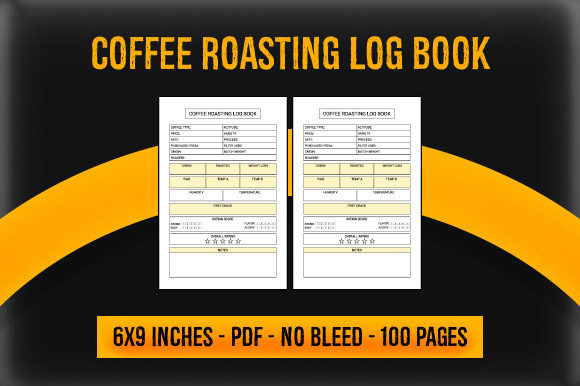
At its core, a Coffee Roasting Journal is a structured logbook designed to capture the critical variables of the roasting process. Unlike a generic diary or unlined notebook, this tool provides a systematic framework for recording data points such as bean origin, roast profile, temperature curves, timing milestones, and sensory cupping notes. In the context of KDP and POD, these journals are interior templates that transform a blank book into a specialized instrument for quality control and skill development.
For the end-user, this journal serves as an external memory bank. Coffee roasting is a complex interplay of thermodynamics and chemistry where slight variations in heat application or airflow can drastically alter the final cup profile. A well-designed journal allows the roaster to track consistency across batches, experiment with new profiles safely, and develop a deeper understanding of how different green beans respond to heat. For the publisher, providing a 100-page interior optimized for this specific workflow demonstrates an understanding of the user's needs, moving beyond generic content to offer genuine utility.
Market Trends Driving Niche Journal Demand
The relevance of the Coffee Roasting Journal is amplified by several converging trends in consumer behavior and the creator economy. We are currently witnessing a significant shift toward "prosumer" hobbies, where enthusiasts invest in professional-grade equipment and education for personal use. Home roasting has moved from a fringe activity to a mainstream pursuit, driven by the desire for freshness, traceability, and customization. These consumers do not merely want to consume coffee; they want to master it. They require tools that mirror professional standards but are accessible in format and price.
Simultaneously, the KDP landscape is evolving. The era of uploading thousands of generic lined notebooks is fading. Amazon’s algorithms and consumer preferences now favor helpful, relevant content that solves specific problems. Publishers who succeed today are those who treat low-content books as micro-SaaS (Software as a Service) products in physical form. A Coffee Roasting Journal fits this paradigm perfectly because it addresses a distinct pain point: the lack of affordable, standardized documentation tools for small-batch roasters. By focusing on this vertical, creators align themselves with the broader trend of hyper-specialization in e-commerce.
The Shift Toward Analog Data Tracking
In an increasingly digital world, there is a counter-movement toward analog record-keeping, particularly in tactile crafts like coffee roasting. While sophisticated roasting software exists, many artisans find that screens create a barrier between them and the machine. Writing by hand engages a different cognitive process, fostering mindfulness and retention. Furthermore, a physical journal does not require Wi-Fi, batteries, or subscriptions. It is always available next to the roaster, resistant to heat and chaff, and offers immediate visual feedback through handwritten graphs and notes. This preference for tangible tools makes the printed Coffee Roasting Journal a resilient product category despite advances in digital technology.
Technical Specifications for Professional Results
Creating a successful Coffee Roasting Journal for KDP requires attention to technical precision. The value proposition of a ready-to-use PDF file lies in its adherence to publishing standards and user experience design. When selecting or creating interiors for this niche, specific parameters ensure the final product meets professional expectations.
- Optimized Dimensions: The 6″ x 9″ inch trim size is the industry standard for functional journals. It strikes the perfect balance between portability and writing surface area. This size fits comfortably on a crowded roasting station, slips easily into an apron pocket, and remains cost-effective to print via POD services.
- Page Count and Structure: A 100-page interior provides substantial utility without becoming unwieldy. This length typically accommodates 50 to 90 individual roast logs, depending on whether the layout uses single or double-page spreads. This volume ensures the journal lasts long enough to establish habits and track seasonal changes in green coffee availability.
- Bleed vs. No Bleed Configuration: High-resolution PDF files must be correctly formatted for bleed settings. Functional journals often utilize no-bleed designs to keep all content within safe margins, ensuring that crucial data fields like temperature scales or tasting wheels are never trimmed during production. However, if aesthetic elements extend to the edge, proper bleed setup is non-negotiable to prevent white borders.
- High-Resolution Clarity: Roasting journals often include fine lines for graphing temperature curves and small text for reference tables. Files must be high-resolution (typically 300 DPI) to ensure crisp printing. Blurry lines or pixelated text undermine the perceived value of the tool and frustrate users attempting precise data entry.
Strategic Implementation for KDP Publishers
For entrepreneurs and marketers entering this space, the Coffee Roasting Journal offers a streamlined path to product launch. Utilizing ready-to-use PDF interiors eliminates the steep learning curve associated with book formatting and interior design. This allows publishers to focus their energy on what truly drives sales: keyword research, cover design, and marketing.
The cover is the primary conversion driver in the KDP ecosystem. While the interior provides the utility, the cover communicates the brand promise. Successful publishers pair these technical interiors with covers that signal expertise. Imagery featuring coffee beans, roasting drums, or minimalist typography appeals to the serious practitioner. Avoiding cliché stock photos in favor of authentic, niche-specific aesthetics helps the book stand out in search results. Because the interior is pre-formatted at 6″ x 9″ with 100 pages, the cover creation process becomes a matter of matching exact dimensions, significantly reducing time-to-market.
Expanding Beyond the Book
Savvy creators view the Coffee Roasting Journal as part of a larger ecosystem. The insights gained from selling this specific journal can inform future product development. Customer reviews might reveal a need for a separate cupping score sheet, a green bean inventory tracker, or a maintenance log for roasting equipment. Each of these represents a new SKU using similar ready-to-use PDF workflows. Additionally, these journals serve as excellent lead magnets or bundled bonuses for coffee education courses, consulting services, or affiliate marketing sites focused on home roasting gear.
Addressing Changing Workflow Expectations
The modern consumer expects products to integrate seamlessly into their existing workflows. A Coffee Roasting Journal succeeds when it reduces friction rather than adding administrative burden. The best interiors feature intuitive layouts that guide the user through the roasting session chronologically: pre-roast checks, charge temperature, turning point, first crack, development time, and drop temperature. Including prompts for sensory evaluation immediately after roasting captures fleeting impressions that are easily forgotten.
This alignment with natural workflow is why generic notebooks fail in this niche. A professional or enthusiast does not want to draw axes for every batch or remember which metrics to track. They want a template that standardizes their process. By providing this structure through a ready-to-use PDF, publishers deliver immediate value. This focus on usability aligns with Google’s Helpful Content guidelines, which prioritize material created for people rather than search engines. When a product genuinely aids the user in achieving better roasts, positive reviews and organic visibility follow naturally.
The Future of Niche Publishing
As the Print on Demand market matures, success will increasingly depend on depth of knowledge rather than breadth of catalog. The Coffee Roasting Journal exemplifies this shift. It is a product born from understanding a specific community’s language, challenges, and aspirations. For freelancers, marketers, and entrepreneurs, this represents a sustainable business model built on serving real needs.
The availability of high-quality, pre-formatted interiors lowers the barrier to entry, but it raises the bar for differentiation. Publishers must now compete on curation, presentation, and audience connection. Those who take the time to understand why a roaster cares about rate-of-rise or why cupping scores matter will create products that resonate. Ultimately, the Coffee Roasting Journal is more than a collection of PDF pages; it is a testament to the enduring value of specialized tools in a generalist world. By leveraging these ready-to-use assets effectively, creators can build a portfolio of functional products that support the passions and professions of a dedicated global community.