Evaluating Crocheting Project Journal Interiors for KDP
The niche of fiber arts documentation has seen significant growth within the self-publishing sector, specifically regarding specialized tracking tools. A Crocheting Project Journal serves as a dedicated logbook for makers to record patterns, yarn specifications, gauge swatches, and project modifications. For publishers utilizing Amazon Kindle Direct Publishing (KDP) or other Print on Demand (POD) platforms, ready-to-use PDF interiors offer a streamlined entry point into this market. These digital assets typically consist of 100 pages of structured layouts designed to eliminate the need for custom interior design. When evaluating these pre-made files for business or personal use, it is necessary to understand their functional scope, technical specifications, and strategic fit within the broader low-content book ecosystem.
Defining the Functional Scope of Crochet Journals
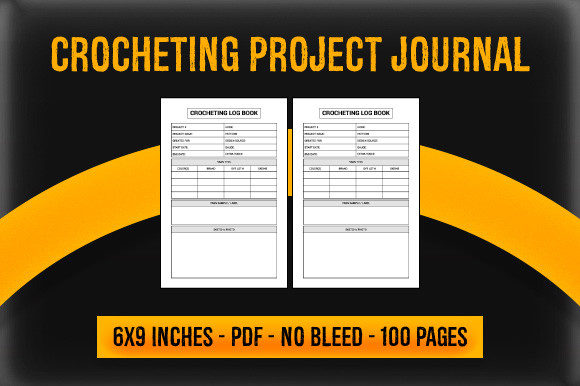
Unlike generic notebooks, a Crocheting Project Journal is purpose-built for the specific data points relevant to yarn crafts. Standard lined paper often fails to capture the complexity of crochet projects, which require tracking hook sizes, yarn dye lots, tension notes, and pattern alterations. Ready-to-use interiors address this gap by providing repetitive, structured templates across 100 pages. These pages generally include sections for project metadata, material costs, stitch counts, and visual graph paper for charting custom designs.
For KDP creators, the value proposition lies in the "no bleed" specification and standard 6" x 9" trim size. This dimension is widely considered the industry standard for portable craft journals, balancing writing space with bag-friendliness. The no-bleed format ensures that all content remains safely within the margins, reducing the risk of printing errors during the POD fulfillment process. Understanding this functional baseline is critical before acquiring or publishing such a file, as the utility of the journal depends entirely on whether the interior templates match the actual workflow of the target demographic.
Strategic Benefits for Publishers and Makers
The primary advantage of utilizing pre-formatted 100-page PDF interiors is the reduction of production time. Designing a functional crochet tracker requires knowledge of both graphic design and fiber arts terminology. Pre-made files bridge this gap, allowing publishers to focus on cover design, keyword research, and marketing rather than interior layout. From a business perspective, this accelerates the time-to-market and allows for rapid testing of different cover aesthetics against a consistent, proven interior structure.
For the end-user, the benefit is immediate usability. High-resolution PDF files ensure that text and grid lines print crisply, which is essential when recording small details like stitch multiples or color codes. The consistency of a 100-page format also provides sufficient volume for long-term projects or multiple smaller makes without making the book physically unwieldy. Furthermore, because these interiors are designed specifically for KDP compliance, they mitigate common rejection risks associated with margin violations or low-quality image sources.
Technical Considerations and Specifications
When selecting a Crocheting Project Journal interior, technical alignment with POD requirements is non-negotiable. The 6" x 9" dimension with no bleed is a safe configuration, but users must verify that the safe zone margins accommodate the binding gutter. Even in no-bleed files, content placed too close to the spine can become unreadable. A high-quality ready-to-use file will have already accounted for this gutter shift, ensuring that writing spaces remain accessible on both left and right-hand pages.
Resolution is another critical factor. While the files are marketed as high-resolution, publishers should inspect the PDF zoom level before uploading. Pixelated grid lines or fuzzy text can lead to negative customer reviews, as crafters require precision. Additionally, the paper quality of standard KDP white paper is 55# (90 GSM). Publishers must recognize that this paper weight has limitations; heavy ink coverage or marker use may cause bleed-through despite the "no bleed" file designation. Managing customer expectations regarding paper opacity is part of responsible product listing.
Tradeoffs and Limitations of Pre-Made Interiors
While convenient, ready-to-use PDF files present distinct tradeoffs. The most significant is market saturation. Because these files are accessible to many publishers, multiple books may share identical interiors. In a competitive marketplace, differentiation becomes solely dependent on cover design and metadata. If ten other sellers are using the same 100-page template, the barrier to entry is low, but so is the defensibility of the product. Publishers must weigh the time saved against the potential lack of uniqueness.
Another limitation is rigidity. Pre-made interiors cannot be customized after purchase without advanced editing software. If the target audience prefers a specific layout modification—such as additional space for knitting alongside crochet or a different ratio of graph paper to lined notes—a static PDF may not suffice. This inflexibility can result in missed opportunities to serve sub-niches within the crochet community. Users evaluating these files must determine if the existing layout is sufficiently comprehensive or if it forces compromises that could affect user satisfaction.
Situational Fit: When to Use vs. When to Avoid
A ready-to-use Crocheting Project Journal interior is a strong fit for publishers new to the fiber arts niche who wish to validate demand before investing in custom design. It is also appropriate for creators who excel at cover art and marketing but lack interior formatting skills. For personal users, these journals are ideal for those who prefer standardized tracking over freeform note-taking and want an affordable, immediately available solution.
Conversely, alternatives may be worth considering for established brands seeking to build a proprietary product line. Custom interiors allow for unique branding elements, specialized prompts, and higher perceived value. Similarly, if a publisher targets a highly specific sub-niche (e.g., amigurumi designers or Tunisian crochet practitioners), a generic 100-page template may lack the necessary specialized fields. In these cases, hiring a designer or learning formatting software may yield better long-term ROI than purchasing a mass-market template.
Decision-Making Framework for Buyers
Evaluating whether a specific Crocheting Project Journal PDF aligns with your goals requires a systematic review. First, assess the page variety. Does the 100-page count include diverse layouts (project planners, inventory logs, gift trackers), or is it merely 100 repetitions of a single page? Variety increases the book's utility and justifies a higher price point. Second, verify licensing terms. Ensure the commercial license permits KDP distribution and check for any restrictions on the number of publications or required attribution.
Finally, conduct a competitive audit. Search Amazon for keywords related to crochet journals and examine the "Look Inside" feature of top-selling competitors. Compare their interior structures against the PDF you are evaluating. If the pre-made file offers comparable or superior organization, it may be a viable asset. However, if existing bestsellers offer significantly more detailed or tailored content, the generic file may struggle to convert sales. By prioritizing functional relevance and market positioning over mere convenience, publishers and makers can make informed decisions that support sustainable outcomes in the low-content book space.