Dream Journal Planner Template: A Practical Resource for Creators and Self-Publishers
For self-publishers, content creators, and wellness entrepreneurs, finding a niche product that balances personal utility with commercial viability is often a challenge. The Dream Journal Planner Template serves as a dual-purpose asset in this space. It is not merely a collection of blank pages but a structured interior designed specifically for the Amazon KDP ecosystem and personal printing needs. Whether you are looking to expand a low-content book portfolio or seeking a high-quality tool for your own subconscious exploration, understanding the practical application of this template is essential for maximizing its value.
Streamlining the KDP Publishing Workflow
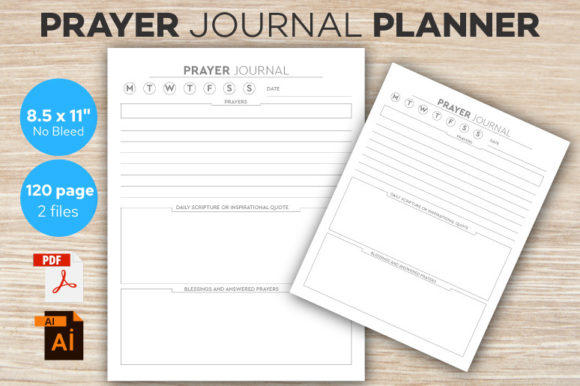
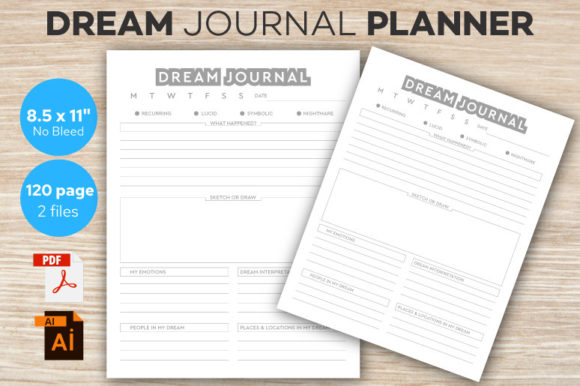
The most immediate application of this Dream Journal Planner Template is for authors and publishers operating on Amazon KDP. The platform has strict technical requirements, and formatting errors are the primary reason books get rejected or receive poor reviews due to printing issues. This template eliminates the guesswork by providing 100 ready-for-upload pages formatted to industry standards.
Consider the scenario of a freelance publisher managing multiple pen names. Creating unique interiors for each journal from scratch is time-prohibitive. With this template, the 8.5 x 11-inch dimensions and no-bleed settings are pre-configured. This means you can focus on cover design and keyword research rather than adjusting margins or worrying about gutter safety zones. The inclusion of high-resolution 300 DPI files ensures that when a customer orders a paperback, the text and prompts remain crisp and professional, avoiding the pixelation that often plagues amateur KDP interiors.
Furthermore, the provision of AI and EPS source files transforms this from a static product into a flexible foundation. If you want to create a "Lucid Dreaming" variant or a "Nightmare Processing" edition, you can open the vector files in Adobe Illustrator, modify the headers, adjust the prompt questions, and export a new PDF without redesigning the entire layout. This scalability is vital for entrepreneurs testing different sub-niches within the dream analysis market.
Personal Use Cases: Beyond Basic Recall
While the technical specifications cater to publishers, the end-user experience dictates whether a dream journal sells or gets returned. Adults aged 20 to 50 use dream journals for vastly different reasons than teenagers. For this demographic, a Dream Journal Planner Template must offer structure that facilitates insight rather than just recording random narratives.
Therapeutic Support and Mental Health: Many adults use dream journaling as an adjunct to therapy. In this context, the template provides a consistent framework for tracking emotional patterns over time. Instead of staring at a blank page after a disturbing dream, the user is guided through specific prompts that help contextualize the experience. Therapists may even recommend specific printable templates to clients who struggle with unstructured journaling, making this a valuable resource for mental health professionals looking for tangible tools to assign between sessions.
Creative Problem Solving: Artists, writers, and marketers often tap into hypnagogic states for inspiration. However, capturing these fleeting ideas requires a system. A structured planner allows creatives to tag dreams with categories like "Visual Imagery," "Dialogue," or "Abstract Concepts." Over six months, a graphic designer might realize their most potent color palettes emerge during specific sleep cycles, or a novelist might track recurring character archetypes. The template turns ephemeral sleep data into a searchable creative database.
Spiritual and Mindfulness Practices: For those engaged in meditation or spiritual development, consistency is key. The 120-page count offers approximately four months of daily tracking, which aligns well with seasonal goal-setting or spiritual retreats. Users can print these templates at home to create custom inserts for existing disc-bound or ring-bound planners, integrating dream work directly into their daily productivity systems without carrying a separate notebook.
Educational and Professional Applications
The utility of a Dream Journal Planner Template extends into educational and coaching environments. Psychology students studying cognitive behavioral therapy or psychoanalysis often need to practice dream interpretation techniques. Educators can utilize editable versions of this template to create customized worksheets that guide students through specific analytical frameworks, such as Jungian archetypes or Gestalt dialogue methods.
Life coaches and wellness influencers also find significant value here. Rather than selling generic advice, offering a branded, high-quality dream journal as a lead magnet or course companion adds tangible value to digital products. Because the template includes editable source files, a coach can add their logo, website URL, and proprietary reflection questions, creating a cohesive brand experience that reinforces their methodology. This moves the product beyond a simple commodity and integrates it into a broader service ecosystem.
Critical Considerations Before Implementation
Before downloading or purchasing a Dream Journal Planner Template, users must evaluate their specific technical and strategic needs to avoid frustration. Not all templates serve all purposes equally, even if they share similar keywords.
- Software Compatibility: The inclusion of AI and EPS files assumes access to vector editing software like Adobe Illustrator or Affinity Designer. If you only have access to Canva or basic PDF readers, you will be limited to using the pre-made PDF as-is. Verify your software capabilities before buying if customization is your primary goal.
- Niche Alignment: Review the actual prompts and layout structure. A template designed for lucid dreaming reality checks differs significantly from one designed for grief processing or creative ideation. Ensure the interior content matches the intent of your target audience or personal practice.
- Licensing Terms: For commercial users, always check the license agreement. While many templates allow for KDP upload, some restrict the number of units sold or prohibit resale of the template itself. Clarify whether you can claim copyright on the modified version or if the base design remains the property of the creator.
- Print vs. Digital Intent: Although optimized for KDP, consider how the template performs as a printable PDF. Some designs rely on grayscale shading that looks elegant in print but consumes excessive ink for home users. If you plan to offer this as a digital download for Etsy customers, test-print a few pages to ensure they are eco-friendly and cost-effective for the end-user.
Maximizing Value Through Customization
The true power of an editable Dream Journal Planner Template lies in adaptation. A generic journal competes with thousands of others; a specialized tool solves a specific problem. Publishers should consider adding introductory sections that explain how to use the journal effectively. Adding a two-page guide on dream symbols or sleep hygiene increases the perceived value and reduces customer confusion.
For personal users, customization might mean rearranging the page order or combining the dream template with other planning elements. Since the files are high-resolution and properly sized, you can merge them with fitness trackers or gratitude logs to create a holistic wellness binder. This modular approach respects the reality that modern adults rarely compartmentalize their lives into single-issue notebooks.
Ultimately, whether you are building a passive income stream on Amazon or seeking deeper self-awareness through nocturnal reflection, the right template acts as a bridge between intention and execution. By focusing on the specific features—editable vectors, print-ready dimensions, and structured content—you transform a simple document into a versatile tool capable of supporting both business growth and personal development.