Swimming Log Book: A Practical KDP Interior for Publishers and Swimmers
For self-publishers and low-content book creators, finding a niche that balances consistent demand with specific utility is the key to building a sustainable catalog. The Swimming Log Book represents one of these high-functionality niches. Unlike generic notebooks or vague fitness journals, a dedicated swimming tracker serves a distinct purpose for athletes, coaches, and rehabilitation patients. When you utilize ready-to-use PDF files for this specific interior, you are not just selling blank pages; you are providing a structured tool that helps users track laps, monitor stroke efficiency, and record personal bests over time.
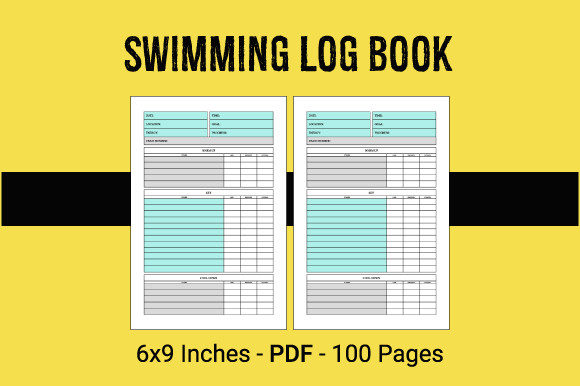
This digital asset is designed specifically for Print on Demand (POD) and Amazon Kindle Direct Publishing (KDP) businesses. It removes the technical barrier of interior design, allowing creators to focus on cover aesthetics and keyword research. The file includes 100 pages of optimized interiors in a 6″ x 9″ format with no bleed settings, ensuring a seamless upload process. However, the true value lies in understanding how end-users interact with this product in real-world scenarios, which informs better marketing and positioning strategies for publishers.
Real-World Applications for Swimmers and Athletes
To market a Swimming Log Book effectively, it helps to understand the daily reality of the people buying it. Competitive swimmers and triathletes do not use these books as diaries; they use them as data collection instruments. During early morning training sessions, pool decks are wet, chaotic, and loud. A swimmer needs a logbook that allows for rapid entry between sets. They are tracking specific metrics like split times, total yardage, stroke count per length, and perceived exertion levels.
Consider the masters swimmer aged 40+ who swims for fitness and longevity. Their usage pattern differs from the competitive teen. They may be less concerned with split times and more focused on consistency, heart rate recovery, and joint health. For this demographic, the logbook serves as an accountability partner and a health record. They might note how their shoulder feels after a specific warmup or track rest intervals to ensure they aren't overtraining. When your interior pages accommodate these varied tracking needs, the book becomes relevant to a broader age range within the 20–50 demographic.
Coaching and Educational Use Cases
Beyond individual athletes, swim coaches and aquatic educators represent a significant secondary market. Coaches often manage dozens of swimmers simultaneously and cannot rely solely on memory or digital apps that require constant screen interaction in a humid environment. A physical logbook provides a tangible record of progress that can be reviewed during parent meetings or season planning.
In educational settings, such as university physical education classes or learn-to-swim programs, instructors use these logs to grade participation and technique improvement. Students are often required to document their hours and reflect on skill acquisition. A pre-formatted Swimming Log Book saves instructors from creating custom handouts and gives students a professional-looking resource to organize their coursework. This institutional angle opens opportunities for bulk sales or targeted advertising toward academic departments and swim schools.
Rehabilitation and Therapeutic Tracking
An often-overlooked segment for this niche is aquatic therapy and rehabilitation. Physical therapists frequently prescribe swimming for patients recovering from injuries, surgeries, or managing chronic conditions like arthritis. In this context, the logbook transforms into a medical compliance tool. Patients need to record pain levels before and after sessions, range of motion improvements, and duration of activity to share with their healthcare providers.
For publishers, this means the Swimming Log Book has potential crossover appeal in the health and wellness category. Users in this space value clarity and simplicity over complex performance metrics. They are looking for a way to visualize recovery milestones. Understanding this distinction helps in crafting book descriptions that speak to therapeutic benefits, expanding the potential customer base beyond just sports enthusiasts.
Technical Specifications and Publishing Considerations
When integrating this ready-to-use PDF into your publishing workflow, specific technical details matter for both production quality and user experience. The included files are formatted at 6″ x 9″ inches, which is the industry standard for portable logbooks. This size fits easily into gym bags and backpacks without being cumbersome on a crowded pool deck. The 100-page count strikes a practical balance; it offers enough capacity for three to six months of regular tracking while keeping the spine width sufficient for legible text and the book lightweight enough for travel.
The "No Bleed" specification is particularly important for functional books. Margins are preserved to ensure that writing spaces, tables, and header information remain fully visible after trimming. This prevents the frustration of users having their tracking columns cut off, which is a common complaint in poorly formatted low-content books. High-resolution PDF files ensure that lines and text remain crisp when printed on standard KDP white paper, maintaining a professional appearance that encourages repeat purchases and positive reviews.
Strategic Customization and Cover Design
While the interior is ready to publish, successful KDP entrepreneurs know that differentiation happens on the cover and in the metadata. Because the interior is standardized, your cover design must signal exactly who this book is for. A neon, aggressive design appeals to competitive sprinters, while a serene, minimalist aesthetic attracts yoga swimmers or therapy patients. You cannot use the same cover strategy for every variation if you want to maximize reach.
Before uploading, consider adding a unique introduction or instruction page if your publishing platform allows minor modifications, or simply address specific features in your book description. Highlight whether the interior includes sections for dryland training, nutrition notes, or goal setting. If the provided template focuses strictly on lap counting, be transparent about that. Misaligning user expectations with the actual interior content leads to returns and negative feedback. Authenticity in listing details builds trust and long-term brand equity.
Evaluating Market Fit Before Publishing
Not every trending niche remains viable indefinitely. Before adding this Swimming Log Book to your portfolio, assess the current competitive landscape. Look at existing bestsellers and read the three-star reviews. These reviews often reveal what is missing in current offerings. Do users complain there isn't enough space for notes? Are the font sizes too small for older swimmers? Is the paper quality an issue for certain pens?
Use these insights to frame your marketing. If competitors lack comprehensive tracking fields, emphasize the detail-oriented nature of your interior in your bullet points. If others have cluttered layouts, highlight the clean, distraction-free design of your 6x9 template. The goal is to connect the static features of the PDF file to dynamic solutions for real problems. A high-resolution file is a feature; a frustration-free logging experience that survives a wet pool deck is the benefit.
Ultimately, this digital resource serves as a foundation for a business model based on utility. Whether targeting elite athletes, fitness hobbyists, or rehab patients, the Swimming Log Book provides immediate value through structure and organization. By focusing on the practical realities of how these books are used—from the chlorine smell of the natatorium to the quiet reflection of post-workout analysis—publishers can create products that resonate deeply with their audience. Success in low-content publishing comes from respecting the end-user's intent, and this ready-to-use interior facilitates exactly that kind of user-centric approach.