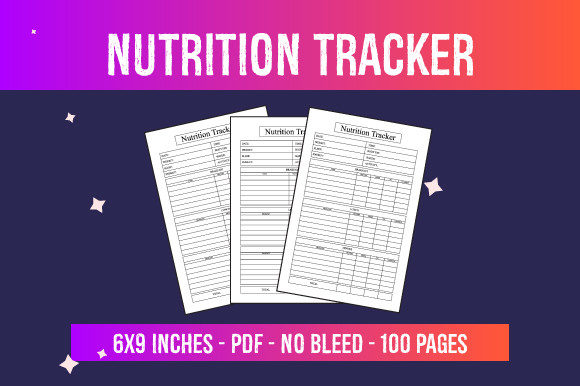
Nutrition Tracker Interiors for KDP: Evaluating Ready-to-Use PDF Assets
For publishers operating within the Amazon Kindle Direct Publishing (KDP) or broader Print on Demand (POD) ecosystem, the efficiency of asset acquisition often dictates profitability. When evaluating a pre-made Nutrition Tracker interior consisting of 100 pages in a 6″ x 9″ format, the primary value proposition is time compression. Rather than spending dozens of hours designing functional tables and layout grids, publishers can integrate a high-resolution PDF directly into their workflow. However, the decision to use ready-to-use files requires a balanced assessment of market saturation, customization limitations, and technical compliance. Understanding where these specific assets fit within a broader publishing strategy is essential for avoiding common pitfalls associated with low-content book creation.
Defining the Utility of Pre-Formated Nutrition Logs
A Nutrition Tracker designed for KDP is distinct from generic notebooks or journals due to its structured data entry requirements. Unlike lined paper or dot grids, these interiors must accommodate specific user behaviors related to dietary monitoring. The 100-page count mentioned in this asset specification suggests a duration of approximately three months if used daily, or longer if utilized as a weekly summary tool. This page count is a strategic sweet spot for POD; it provides enough perceived value to justify a mid-tier price point while keeping printing costs low enough to maintain healthy royalty margins.
The "No Bleed" specification is a critical technical detail that influences both design safety and user experience. In a 6″ x 9″ trim size, no bleed means all content must remain within a defined safe zone, typically leaving a margin of at least 0.375 inches on the binding side and 0.25 inches on outer edges. For a nutrition tracker, this constraint actually benefits usability. Users need space to write without their pen drifting off the page or getting lost in the gutter. Pre-formatted PDFs that adhere strictly to no-bleed standards reduce the risk of manuscript rejection during the KDP review process and ensure the final physical product remains functional for handwriting.
Comparing Ready-Made PDFs Versus Custom Design
Publishers frequently weigh the tradeoffs between purchasing ready-to-use interiors and creating custom layouts from scratch. Each approach serves different business models and skill levels.
Efficiency and Speed to Market
The most significant advantage of a pre-made 100-page PDF is immediate deployment. Designing a comprehensive nutrition log involves calculating column widths, ensuring alignment across 100 separate pages, and testing print margins. A ready-to-use file eliminates this production phase entirely. For publishers managing large portfolios or testing multiple niches simultaneously, this speed allows for rapid iteration. If a specific nutrition angle does not sell, the financial loss is limited to the cost of the asset rather than sunk labor hours.
Differentiation and Brand Identity
Conversely, custom design offers exclusivity. When using a widely available commercial license PDF, there is a non-zero probability that other publishers are listing identical interiors. While the cover art distinguishes the product on the search results page, the "Look Inside" feature may reveal similarities to competitors. Custom interiors allow for unique branding elements, proprietary tracking methods, or niche-specific prompts (e.g., keto-specific macro columns vs. general calorie counting) that pre-made templates cannot offer. Publishers targeting a highly specific sub-niche may find generic trackers insufficient for their audience's needs.
Technical Reliability
High-resolution PDF files provided by reputable asset creators are typically vetted for KDP compliance. Issues like blurry text, incorrect color profiles (RGB vs. CMYK), or margin violations are rare in professional-grade assets. Self-designed files, especially those created by beginners using basic software, often encounter formatting errors during upload. Using a verified template reduces technical friction, though publishers should always download and inspect the proof before publishing to verify line weight and contrast.
Evaluating Fit: When to Use Standardized Interiors
Determining whether a standard Nutrition Tracker PDF is the right choice depends on current business objectives and resource availability. There are specific scenarios where this asset type outperforms custom alternatives.
- New Publisher Onboarding: For those learning the KDP platform, standardized interiors remove variables. Learning keyword research, cover design, and ad management is easier when the interior is a known constant.
- Portfolio Diversification: Established publishers looking to add health and wellness categories to an existing portfolio can use these files as placeholders or supplementary products without diverting focus from core offerings.
- Seasonal Testing: Nutrition tracking sees demand spikes in January and pre-summer. Ready-to-use files enable publishers to capitalize on short-term trends without long-term development commitments.
- Bundling Strategies: If creating a bundle of wellness journals, a standard nutrition tracker can serve as one component alongside custom meal planners or workout logs, balancing development effort across the set.
Limitations and Strategic Tradeoffs
While convenient, relying solely on pre-made 100-page PDFs carries inherent limitations that must be factored into business planning. Recognizing these constraints helps prevent misalignment between product and market expectations.
Lack of Instructional Content
Most ready-to-use nutrition trackers consist purely of logging tables. They rarely include educational introductions, portion size guides, or goal-setting worksheets. Modern KDP buyers increasingly expect "medium content" value—books that guide usage rather than just providing blank space. Publishers using standard PDFs may need to compensate for this lack of instructional depth through enhanced cover copy, A+ Content, or by adding a few custom introductory pages to the front matter if the license permits modification.
Rigidity of Layout
A fixed 100-page PDF cannot be easily altered. If market research indicates that users prefer two-page daily spreads over single-page summaries, or if they require specific sections for water intake or supplementation that the template lacks, the publisher is locked into the existing format. This rigidity makes it difficult to respond to customer feedback or reviews requesting layout changes. Custom designs remain fluid and adaptable; pre-made assets are static.
Licensing and Commercial Rights
Publishers must rigorously verify the licensing terms accompanying any ready-to-use PDF. Some licenses prohibit use in certain marketplaces, limit the number of units sold, or require attribution. Others may restrict combining the interior with other purchased assets. Failing to understand these terms can result in account suspension or legal issues. Always retain documentation of commercial rights and ensure the specific use case (e.g., KDP paperback distribution) is explicitly permitted.
Decision Factors for Asset Selection
When comparing various Nutrition Tracker options or deciding between pre-made and custom, consider the following evaluation criteria:
- Resolution and Line Quality: Verify that the PDF is truly high-resolution. Lines should be crisp at 100% zoom. Gray-scale lines should be consistent; pure black lines sometimes appear too harsh on cream paper, while light gray may not print clearly. Request sample pages if possible before purchase.
- Gutter Margin Adequacy: For a 100-page 6″ x 9″ book, the gutter margin is critical. Ensure the template accounts for binding thickness. Tables that extend too close to the spine become unusable. A proper no-bleed template will have generous inner margins specifically calibrated for this page count.
- Field Relevance: Assess whether the tracking fields match current nutritional science trends. Outdated metrics (e.g., focusing solely on fat grams without distinguishing types) may signal an obsolete template. Contemporary trackers often include protein, fiber, sugar, and micronutrient spaces.
- Customization Permissions: Determine if the license allows adding logos, modifying headers, or inserting additional pages. Even minor allowed modifications can significantly increase differentiation and brand cohesion.
- Price-to-Value Ratio: Calculate the break-even point. If the asset costs $15 and royalties are $2 per book, seven sales cover the investment. Compare this against estimated hourly design rates to determine true cost efficiency.
Integrating Assets Into a Sustainable Publishing Model
A ready-to-use Nutrition Tracker PDF is best understood as a foundational component rather than a complete solution. Successful publishers treat these assets as starting points for broader product development. The 6″ x 9″ dimension aligns with industry standards for portable journals, making it compatible with existing cover templates and marketing materials. The 100-page length supports quarterly tracking cycles, which can be marketed as seasonal editions or progressive programs.
Ultimately, the choice between pre-made and custom interiors is not binary. Many successful KDP businesses employ a hybrid approach: using standardized PDFs for broad-market testing and validated niches, while investing in custom design for proven winners and differentiated brands. By understanding the specific strengths, limitations, and best-fit scenarios of ready-to-use nutrition tracker files, publishers can make informed decisions that balance operational efficiency with market competitiveness. The goal is not merely to publish quickly, but to publish strategically with assets that serve both business objectives and end-user needs.