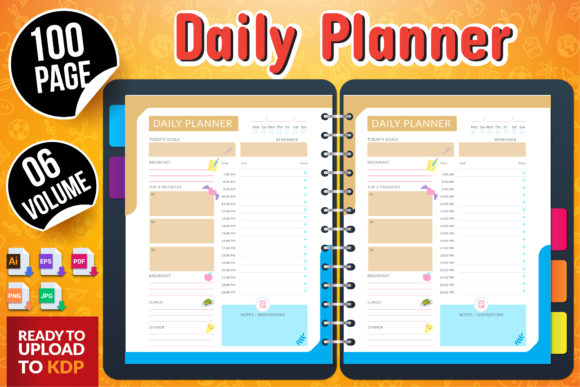
Daily Planner Editable Colorful Page for KDP Success
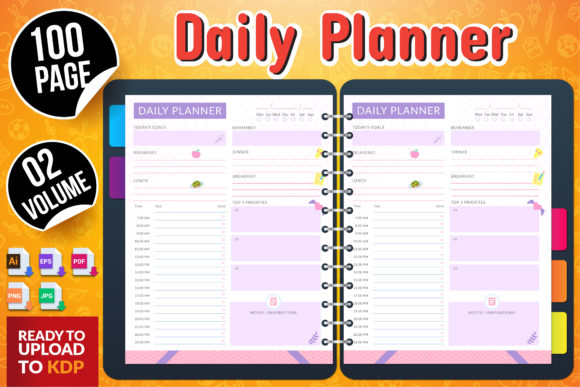
Finding the right balance between aesthetic appeal and functional structure is often the biggest hurdle in creating a successful planner. A Daily Planner Editable Colorful Page template solves this by providing a vibrant, pre-structured foundation that remains fully customizable. Rather than starting from a blank canvas or being stuck with a rigid, unchangeable design, this resource offers a middle ground where creativity meets efficiency. It serves as a comprehensive toolkit for anyone looking to produce high-quality planning materials, whether for personal organization, classroom management, or commercial sale on platforms like Amazon KDP.
Why Customization Matters for Different Goals
The value of an editable template shifts depending on who is using it and what they hope to achieve. For a freelancer or solopreneur, time is the most scarce resource. Creating a unique interior layout from scratch can take dozens of hours. Having access to 100 ready-to-use PNG and JPG files allows these creators to assemble a cohesive product in a fraction of the time. The ability to edit colors and fonts means they can quickly pivot their branding to match seasonal trends—shifting from bright summer hues to warmer autumn tones for Q3 and Q4 releases without redesigning the entire grid system.
Educators and teachers often have different priorities. They need clarity and engagement over marketability. A colorful page helps maintain student interest and can be color-coded for different subjects or activities. Because the files are print-ready at home, a teacher can print twenty copies of a specific weekly spread on Sunday night, test it with students on Monday, and tweak the font size or header layout by Tuesday if the feedback suggests it’s too small. This iterative process is only possible when you own the source files rather than buying a finished physical book.
For KDP publishers and low-content book creators, the focus is strictly on technical compliance and scalability. The "Best KDP" designation implies that these templates have been tested against Amazon’s strict printing guidelines. Margins, bleed areas, and resolution are non-negotiable. Using a verified template reduces the risk of rejection during the upload process. Furthermore, having vector-based AI and EPS files ensures that no matter how much the design is scaled or modified, the text remains crisp and the colors stay within printable gamuts, protecting the creator's reputation and review ratings.
Technical Specifications and File Versatility
Understanding what is actually included in the download helps users determine if this asset fits their current software capabilities and project scope. The package is designed to cover multiple workflows:
- Vector Source Files (AI & EPS): These are essential for deep editing. Users with Adobe Illustrator or compatible vector software can adjust line weights, change global color swatches, and move individual elements without pixelation. This is critical for those wanting to create a proprietary look based on the template.
- Print-Ready PDF: This is the final output format required by most commercial printers and KDP. It preserves all formatting, fonts, and dimensions (8.5″ x 11″), ensuring that what you see on screen is exactly what gets printed.
- Raster Images (100 PNG & JPG): Not everyone has vector software or needs to edit the core structure. These high-resolution images allow users to drag and drop pages into Canva, PowerPoint, or other layout tools. They are perfect for mixing and matching specific days or adding digital stickers for tablet planning.
This multi-format approach acknowledges that modern planning is hybrid. A user might want to sell a physical paperback on Amazon while simultaneously offering a digital version for GoodNotes users. The PNG files serve the digital market instantly, while the PDF serves the print market.
Evaluating Quality and Commercial Viability
When selecting a Daily Planner Editable Colorful Page template, experienced creators look beyond the pretty colors. They evaluate the asset based on long-term utility and commercial safety. One primary concern is saturation. Since many people may purchase the same template, the ability to significantly alter the design is paramount. If a template only allows minor text changes, the resulting books will look identical to competitors. However, if the file includes organized layers and editable color profiles, a creator can produce five distinct planner lines from a single purchase, maximizing return on investment.
Resolution and Print Safety are equally important. Digital screens display at 72 DPI, but professional printing requires 300 DPI. Low-quality templates result in blurry text and jagged lines when printed. The inclusion of high-resolution assets ensures that fine details, such as thin divider lines or subtle background textures, reproduce cleanly. For KDP sellers, this directly impacts customer satisfaction; a blurry interior is the fastest way to receive negative reviews.
Additionally, consider the layout flexibility. A truly useful daily planner page accommodates various scheduling styles. Does the template include space for gratitude, water intake, or top-three priorities? Can these sections be resized or removed? Beginners might appreciate a dense, all-in-one layout that guides them through productivity, whereas minimalists might prefer to delete 60% of the elements to create white space. The best templates act as a modular system rather than a static picture.
Practical Applications Across Skill Levels
Beginners often feel overwhelmed by design software. For this group, the 100 pre-made JPG/PNG files are the entry point. They can learn about planner structure and flow without needing to master bezier curves. They can print samples at home to test usability before committing to a full publishing project.
Intermediate Designers can use the EPS files to study professional layout techniques. By deconstructing how margins, grids, and typography hierarchies are set up in a commercial-grade template, they improve their own design skills while producing a sellable product.
Business Owners view this as inventory. Instead of hiring a designer for $500 per interior, they acquire a licensed asset that provides immediate stock. The key here is licensing verification; ensuring the template allows for commercial use and unlimited prints is vital for business sustainability.
Making the Right Choice for Your Project
Before downloading, assess your specific needs against the features offered. If you are purely a consumer wanting a single planner for personal use, the 100 PNG files might be excessive, and a simple PDF would suffice. However, if you intend to build a brand around organization, the full suite of AI, EPS, and PDF files is necessary infrastructure.
Consider your timeline. If you are aiming for a Q4 holiday release, working backward is essential. Sourcing the Daily Planner Editable Colorful Page now allows ample time for customization, proofing, and navigating KDP’s review queues. Rushing this process often leads to errors. Having a reliable, tested template removes one major variable from the production equation, allowing you to focus on marketing, cover design, and keyword research.
Ultimately, this type of resource bridges the gap between idea and execution. Whether you are organizing a homeschool curriculum, launching a stationery side hustle, or simply trying to get your own life in order with a splash of color, the right editable template provides the structure needed to succeed without stifling your unique vision. It transforms the daunting task of layout design into an accessible, manageable, and potentially profitable endeavor.